
Fujairah Free Zone: The Honest 2026 Guide — Costs, Visas, Banking and Who It’s Really For
Here is the number most people miss when evaluating UAE free zones: Fujairah Free Zone sits on the Arabian Sea coast, not the Arabian Gulf. That single geographic fact — the only UAE free zone with direct Indian Ocean frontage — determines everything about who this zone works best for. If your business moves physical goods between the UAE and South Asia, East Africa, or Far East markets, the shipping economics shift meaningfully when you are based at Fujairah Port rather than routed through Gulf-side logistics hubs. Licences start at AED 7,000 per year for service activities, with total first-year setup (licence + flexi-desk + one visa + establishment cards) typically landing at AED 20,000–30,000. This guide gives you the full picture — costs, visa rules, banking, and an honest assessment of which businesses extract real value here.
Fujairah Free Zone (FFZA) is the UAE’s only east-coast free zone, adjacent to Fujairah Port on the Gulf of Oman. It offers service licences from AED 7,000/year and trading licences from AED 8,000/year, 100% foreign ownership, no minimum share capital, and direct maritime access to Indian Ocean trade routes (South Asia, East Africa, Far East). Best suited to trading, import-export, manufacturing, logistics, and professional services businesses with South Asia or East Africa market exposure.
What Fujairah Free Zone actually is
Established in 1987 under the Fujairah government, FFZA operates adjacent to Fujairah Port — a deep-water commercial port that handles dry bulk, general cargo, oil and chemical tankers, and container feeder services. The free zone falls under UAE federal free zone legislation: 100% foreign ownership, no personal income tax, full repatriation of capital and profits, and zero import and export duties within the zone. Free zone entities maintaining qualifying income status are exempt from the UAE’s 9% corporate tax on profits above AED 375,000.
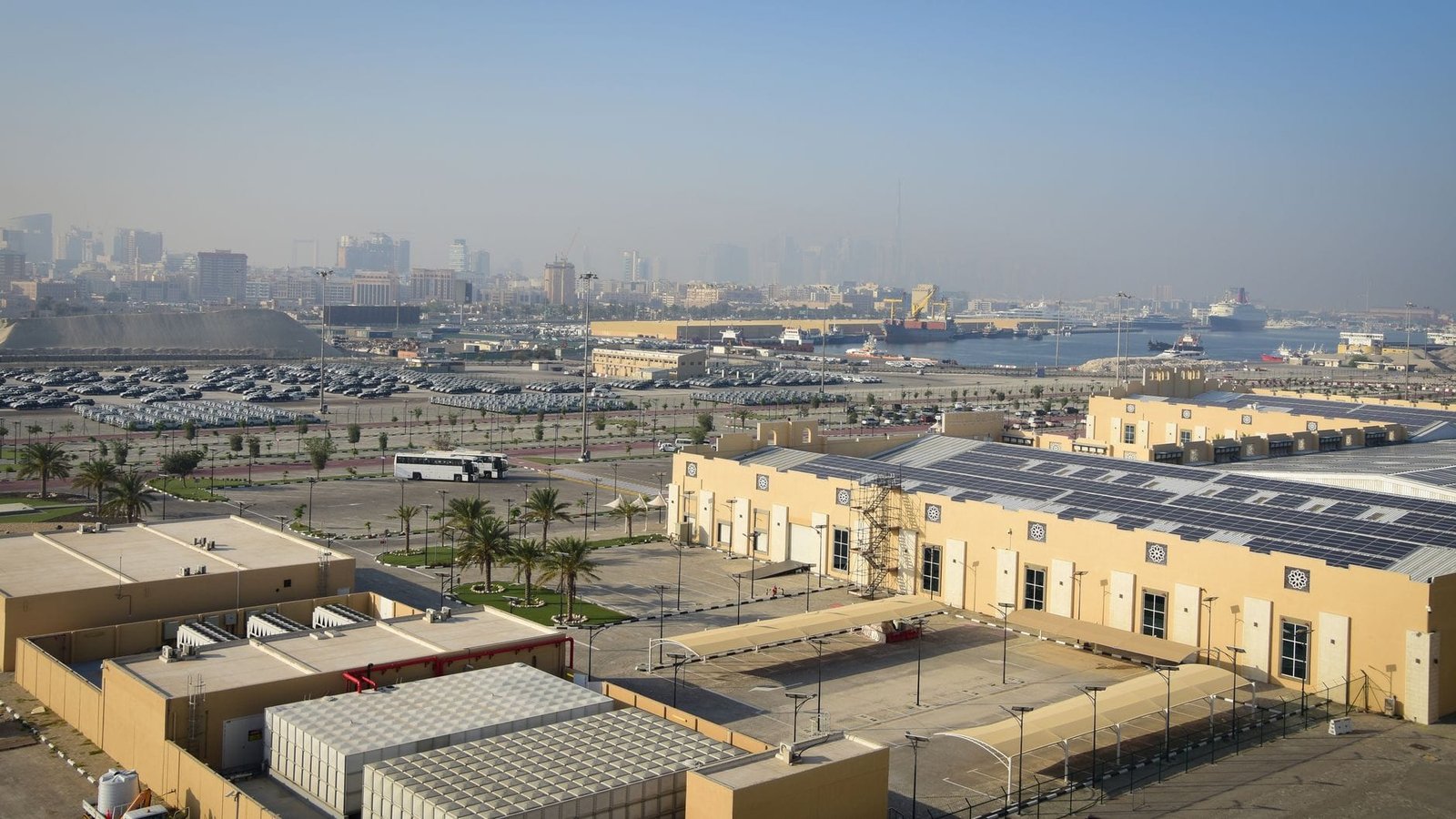
FFZA is a physical free zone with a working industrial and commercial footprint. The zone accommodates flexi-desk operations for service and trading businesses, warehouse units from small storage bays to large bonded storage facilities, and light industrial and manufacturing plots. Its port adjacency is operational — not marketing copy — which matters if your logistics chain actually touches Fujairah Port’s container and bulk handling facilities.
The authority permits two company structures: an FZE (Free Zone Establishment) with a single shareholder, or an FZCO (Free Zone Company) requiring two or more shareholders. Both offer identical operational rights within the zone.
The east-coast advantage — why location matters for certain businesses
UAE geography gives most free zones Gulf coast positions, which means goods destined for South Asia, East Africa, or the Indian Ocean must transit the Strait of Hormuz and add sea-miles. Fujairah’s Indian Ocean frontage removes that routing step. Mainline services from Fujairah Port connect directly to Northern Europe, the Mediterranean, Far East, and North America on weekly schedules, with twice-weekly sailings to the Far East and weekly services to North America. Feeder vessels run weekly to Arabian Gulf ports, the Red Sea, Iran, India, and Pakistan.
For trading companies whose primary supply chain runs India–UAE or UAE–East Africa, the freight cost differential over three to five years is worth calculating before assuming a Dubai address is always the right default. Our complete UAE free zone setup cost budgeting guide covers how to build this comparison into your total cost of ownership before committing to a zone.
Licence types and exact AED costs for 2026
FFZA offers five primary licence categories. Figures below reflect 2026 pricing ranges — always request a formal quote directly from FFZA before finalising your budget, as exact fees depend on the number of activities and visa allocation selected.
Service / Professional Licence — from AED 7,000/year
Covers consultancy, IT services, marketing, management advisory, media production, education, and training activities. The most accessible entry point for solo operators and small service businesses. With a flexi-desk, this is typically a one-visa setup and does not require warehouse or industrial space.
Trading / Commercial Licence — from AED 8,000/year
Permits import, export, re-export, distribution, and wholesale trading of physical goods. The most popular licence type at FFZA given the port’s east-coast position. A single-activity trading licence starts around AED 8,000; multi-activity or general trading covering a broad product range typically runs AED 12,000–15,000 per year.
Manufacturing Licence — from AED 12,000/year
Required for production, processing, or assembly within the zone. The licence fee is the smallest cost in this category — the dominant cost is the physical production space. Total first-year costs including the smallest available workshop unit are significantly higher; get a facilities quote alongside the licence estimate.
Industrial Licence — from AED 12,000/year
For heavier industrial operations, including chemicals handling, bulk material processing, and port-related industrial activities. FFZA has specialist facilities for certain industrial operations tied to Fujairah Port’s cargo handling.
Warehousing Licence — from AED 10,000/year
Required for companies renting warehouse space to store, distribute, or cross-dock goods. Warehouse units start from approximately AED 20,000/year for a 20 sqm bay, scaling up for larger bonded storage needs.
One-time and additional fees to budget for
Registration fee: AED 1,500–2,500. Establishment card (required for visa applications): AED 1,000. Immigration card: AED 1,000. No minimum share capital requirement. If your activities require notarised or attested documents, factor AED 1,000–3,000 for attestation costs. Annual renewal fees mirror the first-year licence cost.
Office options and workspace costs
Flexi-desk — AED 18,000/year
A shared hot-desk arrangement with a registered FFZA address. The AED 18,000 figure typically covers the annual workspace fee; utilities add approximately AED 1,600/year and FFZA requires a refundable security deposit of around AED 10,000 at setup. The flexi-desk arrangement permits one residence visa allocation — sufficient for a solo founder or a consultant running operations remotely.
Warehouses and industrial units — from AED 20,000/year
Private warehouse bays start at approximately AED 20,000/year for the smallest units (circa 20 sqm). Larger bonded warehouses, factory units, and open yards scale up substantially — get an FFZA facilities quote based on your specific sqm and operational requirements. Warehouse licences unlock higher visa quotas than flexi-desk arrangements, making them suitable for businesses building a UAE-based team.
Visa allocation — what to expect
Visa entitlement at FFZA is tied to the workspace package selected. A flexi-desk arrangement typically permits one residence visa. Companies on a dedicated office or warehouse are allocated additional visa quotas based on floor space, with larger units supporting proportionally more visas.
The residence visa process at FFZA: entry permit issued in 3–4 working days → medical fitness test → Emirates ID biometrics → visa stamping in approximately 2 working days. The full process from entry permit to stamped visa typically takes 2–3 weeks. Health insurance is not mandatory for visa processing, though UAE law requires all visa holders to maintain health coverage as a condition of residency.
For a detailed breakdown of what residence visas cost across different UAE free zones, see our complete 2026 UAE free zone visa cost guide. The per-visa fee at FFZA runs approximately AED 3,600, covering government fees for the entry permit, medical, Emirates ID, and visa stamping.
Company formation: how the process works
FFZA has invested in remote-accessible registration, which matters for founders not yet in the UAE. The main steps:
1. Name reservation and activity selection. Submit proposed company name and activity list to FFZA for approval — allow 2–3 business days. 2. Document submission. Passport copies of all shareholders and managers, a board resolution (for corporate shareholders), no-objection letter if the applicant holds a UAE residency under another sponsor, and a brief business plan for manufacturing or industrial applications. Documents can be submitted as clear scanned copies; notarised originals are required for some categories. 3. Payment and licence issuance. Upon document approval, FFZA issues a pro-forma invoice. After payment, the commercial licence is issued in 5–10 business days. 4. Establishment and immigration cards. Required before visa applications can begin; typically issued 5–7 business days after licence issuance. 5. Visa processing. Entry permit, medical, Emirates ID, and stamping as described above.
End-to-end from initial enquiry to residence visa stamped: 4–7 weeks for a straightforward application, longer if any documents require attestation from the applicant’s home country.
Banking for FFZA companies
Banking for UAE free zone companies depends on the individual bank’s compliance and onboarding assessment — no free zone authority can guarantee account approval, and FFZA is no different. That said, FFZA’s legitimate federal free zone status and clear regulatory framework mean standard UAE business banks will engage with FFZA entity applications. Banks active with Fujairah-based businesses include Emirates NBD, Mashreq, RAK Bank, and ADCB, though account opening depends on your business activity, shareholder nationality, and projected transaction profile.
For businesses with trading and import-export activities touching India, Pakistan, or East Africa, UAE banks familiar with those corridors are worth prioritising during the account enquiry process. Our UAE corporate bank account opening compliance checklist covers the document requirements and common reasons applications are delayed.
FFZA delivers the strongest value to three types of businesses: import-export and re-export traders whose supply chain runs India, Pakistan, or East Africa → UAE → GCC or onward (the port economics are genuinely different from Gulf-side zones); manufacturing and industrial operations needing port-adjacent production space with direct Indian Ocean access; and professional service businesses targeting the east coast UAE market (Fujairah Emirate, Khor Fakkan) who want a Fujairah-address operation at a cost structure below the premium Dubai zones. If your business has no connection to east-coast trade routes or Fujairah Emirate clients, the location advantage does not translate into operational savings.
What the licence does not cover
FFZA, like all UAE free zones, requires a local distributor or agent agreement for companies wishing to sell directly to mainland UAE end-customers. Free zone entities can trade freely within the zone and internationally; mainland distribution requires a separate mainland licence or a local agent arrangement. This is a standard UAE free zone operating parameter, not specific to FFZA.
Businesses primarily targeting mainland UAE customers may find the UAE’s most cost-effective free zone options are zones with stronger mainland-adjacent positioning, depending on their distribution model.
Frequently asked questions
What is the minimum cost to set up in Fujairah Free Zone in 2026?
The minimum first-year cost for a service licence with a flexi-desk and one residence visa is approximately AED 20,000–22,000 (licence AED 7,000–9,000 + flexi-desk AED 18,000 + visa and cards AED 5,000–6,000 + security deposit AED 10,000 refundable). Trading licences add a few thousand AED to the licence fee. Always confirm the current FFZA package pricing before signing as fees can be updated annually.
How many visas does a Fujairah Free Zone flexi-desk allow?
A standard flexi-desk package at FFZA permits one UAE residence visa allocation. Businesses requiring more visa slots need to upgrade to a dedicated office or warehouse space, which unlocks additional visa quotas based on floor area.
Can I run my business from outside the UAE with a Fujairah Free Zone licence?
Yes. An FFZA licence gives you a legally registered UAE company that can invoice clients and receive payments without you being physically present in the UAE. However, to hold a UAE residence visa under this company, you must be on a valid entry permit and complete the in-country steps (medical, Emirates ID, visa stamping). Many FFZA licensees operate remotely and visit the UAE periodically to renew their visa.
What types of activities does Fujairah Free Zone permit?
FFZA permits service and professional activities (consultancy, IT, media, education, training), trading and commercial activities (import, export, re-export, distribution), manufacturing and light industrial production, warehousing and logistics, and certain specialised industrial activities linked to Fujairah Port operations. The full activity list is available directly from FFZA; specific activities may require pre-approval or a specialist licence category.
How does Fujairah Free Zone compare to other low-cost UAE free zones?
FFZA sits in a similar cost tier to UAQ Free Trade Zone for entry-level service and trading licences. The differentiating factor is location: FFZA’s east-coast position and port access create genuine operational advantages for businesses with South Asia or Indian Ocean trade exposure that a comparably priced Gulf-coast zone cannot replicate. Businesses without that geographic need should evaluate zones on cost, visa quota, and activity fit rather than location alone.
Is Fujairah Free Zone a good option for e-commerce businesses?
FFZA can work for e-commerce operations with a physical goods component — particularly businesses sourcing from South Asia or East Africa for UAE and GCC resale, where the port access has logistics value. Pure digital e-commerce businesses with no physical import-export component will not benefit from the east-coast location advantage and may find Dubai and Abu Dhabi zones with stronger e-commerce ecosystem support more suitable for their needs.
This guide was researched and written by Faizan, Free Zone Guides Lead at FreezonEra. Faizan has 10 years of experience in UAE company formation across free zone and mainland jurisdictions. All figures are indicative for 2026 and should be verified with FFZA directly before making setup decisions.