
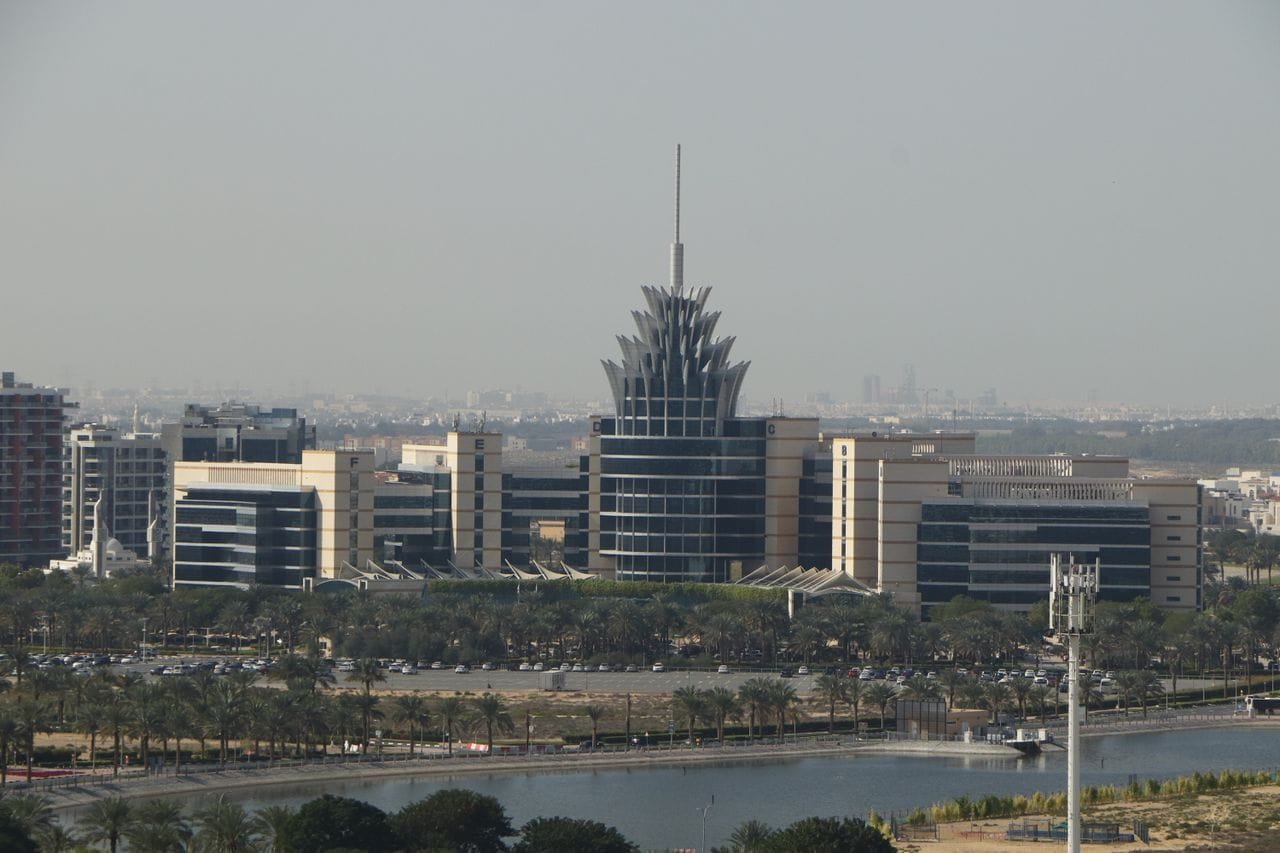
Dubai Silicon Oasis (DSO): The Honest 2026 Guide — Costs, Visas, Banking and Who It’s Really For
Dubai Silicon Oasis is a government-backed technology free zone that charges from AED 12,000 for a licence — but requires a mandatory physical office starting at AED 28,392 per year, making it a different proposition from the virtual-first zones many cost-comparison guides lead with. Over 4,000 companies operate here, and the zone runs as a full residential tech community with 60,000 residents, 80-plus restaurants, schools and a hospital on-site. This guide gives you the real first-year numbers, the visa mechanics, banking reality, and a straight answer on which businesses get the most out of DSO.
Dubai Silicon Oasis (DSOA) is a purpose-built technology free zone and residential district in east Dubai, established in 2004. Licences start at AED 12,000/year with 2 visa allocations. A physical office is mandatory — minimum 13.5 sq m at approximately AED 28,392/year plus a deposit. First-year total before visas: around AED 43,100. The zone suits tech, IT, software, e-commerce, R&D and light manufacturing businesses that want a Dubai tech-community address without DMCC pricing. There is no flexi-desk or virtual-office path; if that is what you need, look at IFZA or DTEC (DSO’s startup arm).
What Dubai Silicon Oasis actually offers
DSOA was established in 2004 by the Dubai government as a technology park and free zone. The site spans roughly 7.2 square kilometres in Dubailand, straddling the intersection of Emirates Road and Al Ain Road — accessible from both central Dubai and the Al Ain corridor. It is not just an office address; it functions as a live-work community that hosts multinational tech firms, mid-sized IT companies and R&D centres alongside residential towers, a shopping mall, international schools and a dedicated medical centre.
The zone is notable for hosting all Dubai government technology pilots. If an initiative from Smart Dubai or the Dubai Future Foundation is being tested in a real environment, DSO is typically where it runs first. That gives resident companies an early view of digital-government integrations before they roll out elsewhere.
Company types registered here include IT service firms, software developers, electronics traders, hardware distributors, e-commerce businesses, R&D centres and light manufacturers. Permitted entity structures are a Free Zone LLC (either FZE for a single shareholder or FZCO for two or more) or a Branch of a foreign company. There is no offshore structure available here.
DSO licence cost in 2026 — the real numbers
The licence fee at DSO starts at AED 12,000 per year and covers up to 7 business activities from the same segment (service, trading or industrial). That figure includes 2 visa allocations. What it does not include is workspace — and workspace is not optional here.
Unlike zones that offer a virtual address or flexi-desk as a minimum, DSO requires a physical office. The smallest available unit is 13.5 square metres. As of 2026, rent for that unit runs to AED 28,392 per year, payable via four post-dated cheques. A refundable deposit of AED 2,704 is required on signing.
First-year cost breakdown
| Item | Cost (AED) |
|---|---|
| Trade licence (2 visa allocations) | 12,000 |
| Office 13.5 sq m (annual rent) | 28,392 |
| Office deposit (refundable) | 2,704 |
| Subtotal before visas | 43,096 |
Add visa costs on top: each residence visa runs approximately AED 6,340 in non-refundable fees (AED 4,860 visa processing + AED 650 medical test + AED 330 Emirates ID), plus a refundable deposit of AED 2,500. A two-person setup — founder plus one employee — adds roughly AED 12,680 in visa fees and AED 5,000 in deposits to the above. Total first-year outlay for a two-visa company: around AED 60,000 + AED 7,704 in deposits.
What drives the cost up
Visa quota scales with office size at a ratio of one visa per 9 square metres. A 13.5 sq m unit technically supports 1.5 visas — in practice, DSO grants 1 visa on the base package. The standard package entry with 2 visa allocations covers the licence fee side, but the physical unit gives you 1 body on the floor. To accommodate 4 staff, you would need at minimum a 36 sq m office, which alters the rent calculation significantly. Amendment fees for company changes run AED 500–2,000 depending on the type. Annual audits are mandatory; the first must be filed 18 months after registration, then every 12 months thereafter.
For cost comparisons: DMCC in central Dubai starts at notably higher first-year figures. For a lower entry point with a Dubai address and no mandatory physical office, see our IFZA free zone setup guide or the cheapest free zone licence comparison.
DTEC: The startup entry route into the DSO ecosystem
Dubai Silicon Oasis manages a subsidiary entity called DTEC — Dubai Technology Entrepreneur Campus — specifically for early-stage tech startups. DTEC packages start from approximately AED 16,715–18,000 per year and include a flexi-desk plus 2 visa allocations. It is the only path inside the DSO ecosystem that does not require a dedicated physical office from day one.
The catch: DTEC is structured for companies in their first five years. After that period, companies that want to remain within the Silicon Oasis ecosystem must migrate to full DSOA registration with a physical office. For startups at the pre-revenue or early-revenue stage who want a tech community environment and a lower entry cost, DTEC is the appropriate starting point. Companies with stable revenue and a headcount that justifies office space register directly with DSOA.
Office options and workspace reality
DSO manages three building clusters under its direct lease portfolio: the Headquarters Building (rent inclusive of utilities), Dubai Digital Park Offices and Techno Hub. Companies can also lease office space from private landlords operating within Silicon Oasis, as the zone includes freehold residential and commercial towers. This gives tenants more market-rate flexibility than in zones with a single-authority landlord.
Office unit sizes step up from 13.5 sq m through standard floor plates in the 50–200 sq m range up to full floors for larger operations. Light industrial units are available for businesses in electronics assembly, testing or hardware prototyping. The zone has no bonded warehouse or logistics facilities comparable to JAFZA or HFZA — it is configured for knowledge economy and light production, not bulk cargo handling.
Visa quota and residency — how it works here
Every 9 square metres of leased office space entitles the company to one residence visa. A 13.5 sq m unit = 1 visa; a 27 sq m unit = 3 visas; a 36 sq m unit = 4 visas.
DSO does not issue Investor or Partner visas. All visas carry managerial designations — typically General Manager, Manager, or similar. Notably, the company’s General Manager must hold a residence visa issued through DSOA rather than through another entity.
Visa processing takes 5–7 working days after documents are approved. Applicants outside the UAE pay lower processing fees (AED 3,260 vs AED 4,860 for in-country applicants) but must enter within 60 days of entry permit issuance to complete the medical test and biometrics. All visas are valid for 2 years. An additional fee of AED 5,000 applies to applicants over 60 years of age.
For a fuller picture of free zone visa costs across the UAE, see our UAE free zone visa cost guide.
Banking at DSO
DSO-registered companies have straightforward access to mainstream UAE banking. Emirates NBD, FAB, Mashreq, RAK Bank and ENBD Business all have branches or relationship teams servicing the tech-zone corridor. A physical office lease agreement — which DSO requires anyway — is one of the documents banks look for when assessing a new business account application, so the zone’s mandatory office policy actually smooths the banking path compared to virtual-office setups.
Bank account opening takes 2–4 weeks from document submission. The General Manager’s in-person visit to a branch is standard for most banks. Digital-first fintechs (Wio Bank, Pyypl, Mashreq Neo) allow partial remote onboarding but still require identity verification. For the full document checklist, see our corporate bank account guide.
Corporate tax and compliance
Free zone companies registered at DSO are eligible for the UAE’s Qualifying Free Zone Person status, which applies a 0% Corporate Tax rate on qualifying income — provided the company meets Federal Tax Authority conditions, maintains adequate substance, and does not derive income from domestic UAE transactions above the de minimis threshold. The standard 9% corporate tax applies to profits above AED 375,000 that fall outside qualifying income. VAT at 5% applies to taxable supplies within the UAE once turnover exceeds AED 375,000.
The mandatory annual audit requirement at DSO is worth factoring into ongoing costs. Budget AED 5,000–12,000 per year for an approved auditor depending on company size and transaction volume.
Who Dubai Silicon Oasis is really for
DSO delivers clearest value to tech and IT businesses that need a physical Dubai office, an established tech-community ecosystem, and a credible address without paying DMCC rates. It works well for software companies, IT service providers, electronics traders, e-commerce platforms, R&D centres and light manufacturers in the tech sector. The live-work infrastructure — residential towers, schools, hospital — makes it particularly practical for founders who want their staff to live near the office. Startups at pre-scale stage are better served by DTEC first, then migrating to DSOA when headcount justifies an office. For media companies, creative agencies and digital-content businesses, Dubai Internet City (DIC) offers a comparable free zone address with a stronger media and digital-marketing cluster.
DSO is less suited to businesses that need a zero-overhead virtual setup, freelancers (no freelance licence category exists at DSOA), or heavy manufacturing and bulk logistics operations. If minimum overhead is the primary criterion, zones with virtual-office paths such as IFZA, SPC or UAQ FTZ offer lower entry costs.
The step-by-step setup process
Registration at DSO takes 2–3 weeks and can be initiated remotely for document preparation, though in-person attendance is required for the medical test, biometrics and final visa collection.
The sequence: select business activities and confirm they fall within DSO’s permitted categories → choose entity type (FZE or FZCO) → select office unit and sign lease → submit application with passport copies, photos, residential address and entry documentation → receive incorporation certificate, trade licence, lease agreement and MoA → secure the establishment card → apply for entry permits → complete medical and biometrics in Dubai → receive Emirates ID → open corporate bank account.
Amendment fees (share transfer, name change, activity change) range from AED 500 to AED 2,000. Liquidation costs approximately AED 2,000 and takes about one month, covering visa cancellation, establishment card cancellation and licence closure. A final audit report is required before dissolution.
Frequently Asked Questions
Is there a flexi-desk option at Dubai Silicon Oasis?
No. DSO does not offer a virtual office or flexi-desk for standard company registration. The minimum physical requirement is a 13.5 sq m office unit. The startup-focused subsidiary DTEC does offer a flexi-desk package, but DTEC is structured for early-stage tech companies in their first five years.
How many visas can a DSO company support?
One residence visa per 9 square metres of leased office space. The base 13.5 sq m unit supports 1 visa; to sponsor 3 visas you would need at least a 27 sq m unit. The licence package includes 2 visa allocations, but actual visa issuance is still tied to physical office size.
Can a DSO company trade within the UAE mainland?
DSO companies can supply services to mainland UAE clients and trade globally, but they need a mainland distributor or local agent for direct retail or wholesale to UAE-based customers, as with other free zone entities. Engaging a mainland branch or appointing a local distributor is the standard route for UAE domestic sales.
Does DSO require an annual audit?
Yes. An audited financial statement from a DSO-approved auditor is required. The first audit is due 18 months after the company’s registration date; after that, annual audits must be filed at renewal. This is a non-negotiable compliance requirement and applies regardless of revenue level.
What is the difference between DSO and DTEC?
DTEC (Dubai Technology Entrepreneur Campus) is a startup incubator operating within the Silicon Oasis ecosystem. It offers a lower entry cost (from approximately AED 16,715) with a flexi-desk option and targets early-stage tech startups. After five years, companies are expected to migrate to full DSOA registration, which requires a physical office. DTEC suits the pre-scale phase; DSOA suits companies that have outgrown an incubator environment.
How does DSO compare for banking?
DSO’s mandatory physical office makes banking easier than at virtual-only free zones, since banks require evidence of physical premises. Mainstream banks including Emirates NBD, FAB and Mashreq all serve the area. Account opening typically takes 2–4 weeks. See our full corporate banking checklist for required documents.