
For a full breakdown of DMCC costs, visas and banking, read our honest 2026 DMCC guide.
DMCC Free Zone – The Honest 2026 Guide: Costs, Visas, Banking and Who It’s Really For
Most DMCC guides show you a number — AED 18,500 — and stop there. That figure is the base service licence fee, and it is accurate. It is also roughly one-third of what you will actually spend in year one. The real first-year cost for a DMCC company with a flexi-desk and a single resident visa sits between AED 52,000 and AED 60,000. With two visas it climbs to AED 65,000+. This guide gives you the complete picture: every fee line, the visa quota rules that catch founders by surprise, which banks actually open accounts for DMCC entities in 2026, and the sectors where a DMCC address genuinely earns its premium.
DMCC is the UAE’s most awarded free zone — and its cost structure reflects the infrastructure and credibility it delivers to established businesses. If your projected year-1 revenue exceeds AED 500,000 and you operate in commodities, technology, financial services, or professional services with international billing, DMCC delivers infrastructure and credibility that lower-cost zones cannot match.
What Is DMCC and Why Does It Have 23,000+ Member Companies?
Dubai Multi Commodities Centre (DMCC) was established by UAE Federal Decree in 2002 with a specific mandate: build a regulated hub for trade in physical commodities — gold, diamonds, tea, coffee, steel, and energy products. Two decades later, DMCC has become the UAE’s largest free zone by member count, with more than 23,000 registered companies across 600+ approved business activities.
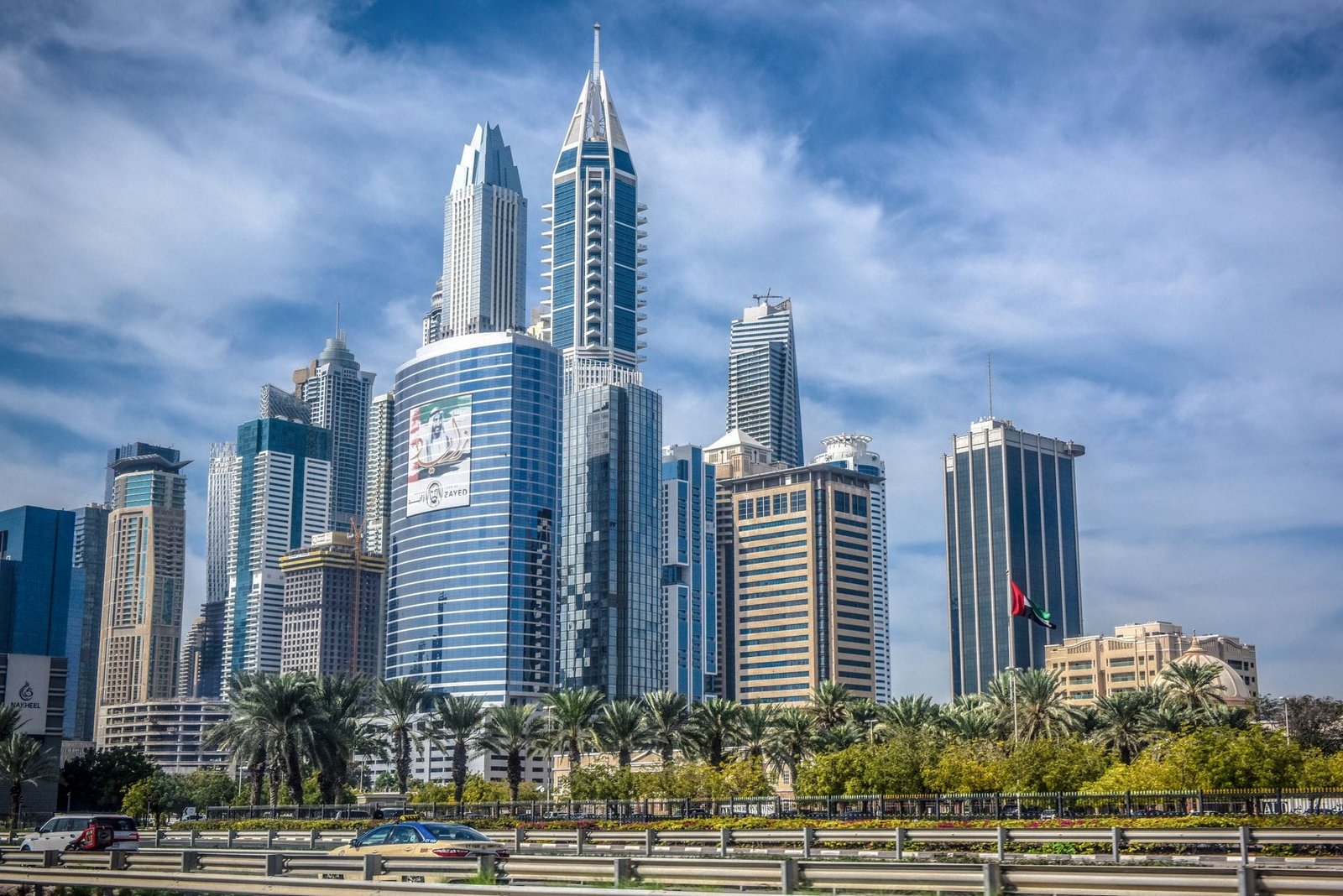
The physical home of DMCC is Jumeirah Lakes Towers (JLT) in Dubai — a 79-tower mixed-use district with genuine amenity: public transport (the DMCC Metro station is one of the busiest on the Red Line), restaurants, gyms, residential towers, and international schools nearby. This is a functioning urban business district where clients actually visit, not an industrial estate at the edge of a city.
DMCC’s Authority, chaired by Ahmed Bin Sulayem, operates as both the free zone regulator and a major property landlord in JLT — which explains both the strong regulatory framework and the non-negotiable registered address cost. You cannot hold a DMCC licence without a physical address registered within its jurisdiction.
As a UAE free zone, DMCC provides the standard structure: 100% foreign ownership with no local sponsor requirement, 100% repatriation of profits, zero customs duties within the free zone, and — under the 2023 UAE corporate tax framework — zero corporate tax on qualifying income up to AED 375,000 net profit, with a 9% rate above that threshold.
One structural point that matters operationally: a DMCC licence is a free zone licence, not a mainland licence. DMCC companies cannot sell goods or services directly to UAE mainland customers without either a separate mainland entity or a formal import-of-services arrangement. For businesses that primarily serve international clients or B2B counterparties, this is easily managed. For businesses whose revenue depends on direct UAE retail or mainland B2B sales, factor this into your structure from the outset.
Licence Types and What Each Covers
DMCC issues three primary licence categories. The cost difference between them is meaningful, and the permitted activities differ significantly.
Trading Licence — AED 20,000–25,000/year
Covers import, export, storage, re-export, and distribution of physical goods. The natural fit for commodity-related activities: gold, diamonds, coffee, tea, energy products, agricultural commodities, and general trading. In international commodity circles, a DMCC Trading Licence carries genuine credibility with counterparties in Geneva, Singapore, and London. Each additional activity listed on the same licence costs AED 2,500.
Service Licence — AED 18,500/year (single activity)
Covers consulting, IT services, marketing, finance, legal advisory, HR, design, and most professional services. The most common licence type for new DMCC members. Adding a second activity costs AED 2,500; a third, another AED 2,500. A management consultant who also wants to provide IT advisory should budget AED 23,500 for the licence alone.
Industrial Licence — from AED 22,000/year
Covers light manufacturing, packaging, processing, and assembly within the free zone. Less common; fees start from AED 22,000 per year and increase depending on the nature of production activities. Industrial licence holders typically require production space beyond a standard flexi-desk, which adds materially to total annual cost.
The Real Year-One Cost: Every Fee Line
Here is the complete year-one cost structure that the headline licence fee does not include:
| Fee Item | AED | Frequency |
|---|---|---|
| Registration fee | 8,000 | One-time |
| Service licence (single activity) | 18,500–25,000 | Annual |
| Flexi-desk / registered address (mandatory) | 15,000–18,000 | Annual |
| Establishment card | 2,000 | One-time |
| Immigration card | 1,500 | One-time (renews every 2–3 yrs) |
| Notarisation and attestation | 2,000–4,000 | One-time |
| Total year-one — no employees | 47,000–52,000 | |
| Total year-one — with 2 residency visas | 57,000–65,000 |
From year two onwards, the one-time fees drop out. The realistic annual renewal cost for the same setup: AED 35,000–48,000. Visa renewals cost AED 3,000–4,500 per visa every two years. A standard free zone audit (required for renewal) costs AED 3,500–8,000 — this is one of the most consistently overlooked recurring costs.
A cost almost no guide mentions: DMCC requires a corporate bank account for licence activation. Opening an account with a traditional UAE bank takes 6–12 weeks. A Wio Bank fintech account is accepted by DMCC for activation and can be operational in 3–5 days — use it as a bridge while a traditional bank application progresses. For the detailed cost comparison across every line item, the full DMCC cost breakdown guide covers each fee by activity and visa count.
Visa Allocation: The Quota Rule That Catches Founders Off Guard
DMCC ties visa quota directly to your office type. This is the single aspect of the zone that surprises most first-time applicants.
Flexi-Desk — 3 Visas Maximum
Three visa allocations means three people can hold UAE residency under your DMCC licence. Typically: the founding shareholder, one dependant (spouse or family member), and one employee. If a founder wants to sponsor a spouse and hire two team members on local visas, they exceed the quota before accounting for any future growth. Scaling beyond three residents requires upgrading to a private office.
Private Office (up to 200 sqft) — 4–6 Visas
Fully furnished, private offices in DMCC-managed buildings: AED 55,000–120,000 per year depending on size. The visa quota scales with additional footage — approximately one additional allocation per 200 sqft. For companies planning a small UAE-based team, this tier is the natural next step.
Per-Visa Cost — AED 5,000–7,000 Each
Each UAE residency visa under DMCC includes: application fee (AED 500), entry permit or status change (AED 500–1,000), medical fitness test (AED 300–400), Emirates ID (AED 370), visa stamping (AED 300), plus agent service fees if applicable. Dependant visas for a spouse or children count against the same quota as employee visas — plan this balance before committing to a flexi-desk.
DMCC residency visas are valid for two years. Renewals cost AED 3,000–4,500 per visa and take 2–4 weeks. Late renewals incur AED 100 per day in overstay penalties. For a full breakdown of UAE free zone visa costs and categories, see the UAE free zone visa cost guide.
On the UAE Golden Visa: DMCC licence holders can qualify through the investor route (AED 2 million qualifying investment) or the entrepreneur route (existing project valued at AED 500,000+ approved by an authorised entity — DMCC is an approved entity). DMCC has formal partnerships with UAE authorities to streamline the Golden Visa paperwork for qualifying shareholders, but the underlying financial eligibility criteria must be independently met.
Business Activities: What 600+ Options Actually Means in Practice
DMCC’s approved activity list runs to more than 600 entries. For most business types, the relevant question is not whether an activity is available — it almost certainly is — but whether DMCC’s cost structure is proportionate for that specific activity type.
Commodity Sectors
Gold, diamonds, precious metals and gemstones (DMCC runs dedicated vaulting infrastructure and internationally recognised certification for gold and rough diamonds), coffee, tea, cacao, agricultural commodities, energy products, petrochemicals, and steel. For commodity businesses, a DMCC Trading Licence is not just an administrative box — counterparties in Geneva, Singapore, and Hong Kong specifically look for the DMCC affiliation when transacting.
Technology and Digital
Software development, IT consulting, cybersecurity, AI and data analytics, crypto and blockchain (DMCC’s dedicated Crypto Centre and Virtual Assets Ecosystem operate within the zone), gaming, and e-commerce. DMCC’s tech cluster has expanded significantly since 2020 through FinX (its FinTech ecosystem) and targeted programmes for Web3 and digital assets businesses.
Financial Services
Fund administration, financial advisory, wealth management, insurance brokerage, and financial consultancy are all available under DMCC licensing. One important distinction to understand: DMCC is not DIFC. If your financial services activity requires DFSA authorisation — asset management, regulated investment advice, banking — you need a DIFC licence. DMCC covers unregulated and lightly-regulated financial services; DIFC covers fully regulated financial activities. Confusing the two is a common and expensive mistake.
Professional Services
Management consulting, legal consultancy (non-litigation), accounting, audit, HR advisory, marketing, PR, media production, and education consulting. Professional service firms billing international clients find DMCC’s service licence a credible and administratively clean structure.
The Application Process: Step by Step
DMCC is known for one of the more structured application processes among major UAE free zones. The timeline is predictable when documents are prepared correctly; the bottleneck is almost always on the applicant side, not DMCC’s internal processing.
Step 1 — Company Name Reservation
Apply through the DMCC member portal (my.dmcc.ae). Approval: 1–2 business days. DMCC naming conventions prohibit country names, government references, and terms implying regulated financial services unless the relevant authorisation is in place.
Step 2 — Submit Incorporation Documents
Required: passport copies for all shareholders and directors, recent bank statement (3–6 months personal), no-objection letter from current UAE employer (if applicable), and a completed Memorandum of Association (DMCC provides a standard template). Nationals from countries requiring apostille — UK, US, India, Pakistan, most EU member states — must apostille and attest key documents before submission. Allow 2–4 weeks for this step before DMCC submission.
Step 3 — Pre-Approval and Fee Payment
DMCC reviews documents and issues a pre-approval letter within 3–7 business days. Pay the registration fee (AED 8,000) and first-year licence fee at this stage.
Step 4 — Secure Registered Address
Sign the flexi-desk agreement or private office lease with DMCC. This triggers issuance of the official company address — a prerequisite for licence issuance and corporate bank account applications.
Step 5 — Licence Issuance
With documents complete and address confirmed, DMCC issues the formal licence within 7–15 business days. Total timeline from first document submission to licence in hand: 4–8 weeks for most nationalities.
Step 6 — Establishment Card and Immigration Card
These two cards open the immigration file for your company — required before any UAE residency visa can be processed. Apply through the DMCC portal; each takes 3–5 business days.
Step 7 — Bank Account Opening
With your licence, MoA, and establishment card in hand, approach your chosen bank. Open Wio Bank (3–5 days) to activate your licence and get operationally running; pursue a traditional bank account in parallel for the full banking relationship.
Banking: Which Banks Work for DMCC Companies in 2026
DMCC’s regulatory standing means UAE banks are familiar with the zone. Familiarity speeds onboarding — but compliance processes still apply to every new account regardless of the free zone name.
Emirates NBD — The Official DMCC Banking Partner
Most reliable option for standard business profiles. Service and consulting businesses: 6–10 weeks to activation. Commodity trading companies: 12–16 weeks due to enhanced due diligence. Minimum balance: AED 50,000. Online banking infrastructure is strong.
Mashreq Bank
Faster for technology and professional service companies — typically 4–8 weeks for clean profiles. Has invested significantly in SME banking in recent years; worth pursuing as a first-choice alternative for non-commodity businesses.
ADCB (Abu Dhabi Commercial Bank)
Solid option particularly for non-UAE national shareholders. Minimum balance sometimes more flexible (AED 25,000 in certain packages). Timeline: 8–12 weeks for full activation. Good international wire infrastructure.
RAKBANK
Faster onboarding than the larger banks — 4–6 weeks in many cases — but more restrictive on high-risk activity categories. Strong option for straightforward professional service and consulting businesses.
Wio Bank (Fintech)
Operational in 3–5 days. DMCC accepts Wio for licence activation. Limitations: no trade finance, no cheque book, some international counterparties will not transfer to a digital-only account. Best used as a bridge while a traditional bank application progresses. For the full corporate bank account compliance checklist, see the bank account opening guide.
The Compliance Reality
If your business involves international transfers to Southeast Asia, Sub-Saharan Africa, or certain MENA markets, expect additional compliance questions at every bank regardless of free zone. The DMCC name opens the first door — your specific transaction profile determines the rest. Have your AML compliance documentation, source-of-funds evidence, and client contract samples ready before approaching any bank.
Office Options Inside the Zone
The office tier you choose at DMCC determines your visa quota and is the single largest variable in your annual cost structure after the licence fee itself.
Business Centre Flexi-Desk — AED 15,000–18,000/year
Registered address at DMCC Business Centre (Jumeirah Bay X2 Tower). Shared hot-desking, meeting rooms on a booking basis (typically 8–10 hours per month included), mail handling, receptionist services. The desk is shared — there is no dedicated seat. Visa quota: 3. This is the standard starting point for most new DMCC companies.
Serviced Private Office — AED 55,000–120,000/year
Fully furnished, private offices in DMCC-managed buildings. Internet, cleaning, and utilities typically included. Visa quota: 4–8 depending on size. The right option for companies bringing a small team to Dubai and needing a professional, client-facing workspace in JLT.
Shell-and-Core JLT Lease
Direct lease of raw office space in any JLT tower, fitted out at your own cost. AED 80–140 per sqft per year for the raw space; AED 200–400 per sqft for a quality fit-out. Minimum commitment: typically three years. Best for established businesses that need full ownership of their office environment. Visa quota scales with leased area.
Line items not included at any tier: JLT parking (AED 500–800 per bay per month), dedicated phone lines, IT infrastructure beyond standard internet, and external signage. Budget AED 12,000–18,000 per year for these for a small team with basic operational needs.
Who DMCC Is Built For — Honest Assessment
DMCC is the right choice when the zone’s name, location, or commodity infrastructure genuinely adds commercial value to your business — not just a registered address. The AED 50,000–65,000 year-one cost is a premium that pays for real infrastructure and credibility.
Commodity traders and brokers who need DMCC’s jurisdiction on their licence. In gold, diamonds, coffee, and energy circles, DMCC-registered entities carry weight with international counterparties that a less prominent zone cannot replicate. The operational ecosystem — vaulting, certification, trade-matching platforms — exists and functions.
Technology and digital businesses targeting international clients where a recognised Dubai JLT address matters in proposals and client conversations. The DMCC tech cluster is a functioning community; the DMCC Metro stop makes it accessible to the broader Dubai workforce.
Financial services firms providing advisory, fund administration, or wealth management services (unregulated). DMCC’s FinX programme and wealth management ecosystem provide a peer network and regulatory standing that smaller zones cannot match for this sector.
Professional service consultancies billing international clients where credibility in the zone’s name helps win mandates. The JLT meeting-room infrastructure supports a professional client experience without a permanent private office commitment.
Regional holding companies using DMCC as the structure above UAE and GCC operating subsidiaries. DMCC’s holding company and SPV framework is well-understood by lawyers, accountants, and banks across the region.
Founders prioritising the lowest possible entry cost will find strong options across the UAE free zone landscape — RAKEZ, IFZA, and Sharjah Media City (SHAMS) each offer competitive packages at different price points. A useful planning benchmark: if your first-year DMCC total represents less than 10% of projected year-1 revenue, DMCC’s infrastructure scales naturally with your business. The cheapest UAE free zone guide and the UAE free zone formation cost guide provide full cross-zone cost comparisons to help you identify the right fit for your specific budget and activity.
Renewal, Compliance, and Closing a DMCC Company
DMCC sends renewal notices 90 days before licence expiry. Renewal is managed through the member portal (my.dmcc.ae). Required: audited financial statements, or a declaration of accounts letter for inactive companies. A standard free zone audit costs AED 3,500–8,000 — this recurring annual cost is one founders most often underestimate.
Year-2-onwards annual total (same setup, without one-time fees): AED 35,000–48,000. Visa renewals at AED 3,000–4,500 per visa every two years. Business activity amendments at renewal: AED 2,500 per added activity. Renewal is also the right time to correct any mismatch between licence activities and what the business is actually doing.
Company closure takes 6–12 weeks and costs AED 5,000–8,000, including a liquidator’s report and DMCC clearance certificate. Start the process at least 90 days before renewal if you have decided not to continue — an expired licence incurs penalties that increase the close-out cost.
Frequently Asked Questions
How long does it take to get a DMCC licence in 2026?
Document submission to licence issuance: 7–15 business days. Total timeline including document preparation and attestation: 4–8 weeks for most nationalities. Nationals from countries requiring apostille should add 2–4 weeks before DMCC submission.
Does DMCC require a local UAE sponsor?
No. 100% foreign ownership is the standard in DMCC — no local sponsor has ever been required. This has been the case since DMCC’s founding in 2002.
What is the minimum share capital for a DMCC company?
AED 50,000 for a Free Zone Company (FZCO). This is declared capital — no upfront blocked-account deposit is required — but banks will typically expect evidence of paid-up capital during KYC in the first 6–12 months.
Can a DMCC company invoice UAE mainland clients?
Yes, for services, with a qualification. A formal import-of-services arrangement is technically required, and many UAE mainland clients are not set up to receive this. In practice, most DMCC service firms bill internationally or via a mainland-registered intermediary. If mainland revenue is the majority of your business, plan a dual structure from the start.
Which UAE banks work best for DMCC companies?
Emirates NBD (official partner, most reliable), Mashreq (fastest for tech and professional services), ADCB (solid for international shareholders), RAKBANK (fastest onboarding for standard profiles), and Wio Bank (3–5 days, for licence activation and bridging). See the bank account opening guide for the full compliance checklist.
Can a DMCC licence qualify me for a UAE Golden Visa?
Potentially. The investor route requires AED 2 million in qualifying investment; the entrepreneur route requires a project valued at AED 500,000+ approved by an authorised entity (DMCC is approved). DMCC has formal partnerships to streamline the Golden Visa paperwork for qualifying shareholders — the underlying financial criteria must still be independently met.
What happens if I miss the DMCC renewal deadline?
Late penalties accrue on a sliding scale from the expiry date and can add AED 5,000–15,000 to renewal costs if left significantly overdue. Act on DMCC’s 90-day advance notice rather than the final reminder.
DMCC is the UAE’s most credentialed free zone, and that credential has tangible commercial value in the right sectors. The year-one cost of AED 50,000–65,000 reflects the full package: JLT infrastructure, strong regulatory standing, banking acceptance, and a commodity ecosystem that is genuinely operational. If your business profile matches the sectors and billing patterns above, DMCC delivers consistently. For a personalised cost breakdown or to start your DMCC application, message the FreezonEra team on WhatsApp — we typically respond within the hour.