
ADGM Abu Dhabi Global Market – The Honest 2026 Guide: Costs, Licences, Banking and Who It’s Really For
By Hayath, Regulation & Updates Editor — FreezonEra
ADGM (Abu Dhabi Global Market) is the UAE’s international financial centre on Al Maryah Island. A non-financial commercial licence costs around AED 38,000 per year in registration fees — but you must add a mandatory physical office lease starting from AED 50,000 per year, pushing minimum year-one costs to AED 100,000–130,000 for a commercial entity. Financial services firms start higher. There are no virtual offices. The zone operates under English common law, offers 0% corporate and personal tax, and 100% foreign ownership. It is built primarily for financial services, holding companies, and serious professional services firms — not for sole traders or micro-businesses seeking a budget licence.
ADGM is not a zone for everyone, and that is precisely its value proposition. If you are setting up a regulated financial business, a family office, an asset management firm, or a holding structure for a global group, ADGM gives you something few free zones in the UAE offer: a genuinely international common law jurisdiction with English courts, a credible financial regulator (the FSRA), and direct access to Abu Dhabi’s sovereign wealth ecosystem.
If you are a freelancer looking for the cheapest UAE licence, stop here — this is not that guide. But if you are building something in financial services, fintech, wealth management, or need a clean international holding structure, read every section below. The costs are real, the requirements are firm, and the benefits are substantial.
- What is ADGM and where is it?
- Who ADGM is really for
- Entity types available in ADGM
- Licence categories: financial and non-financial
- The full cost breakdown for 2026
- Registration process and timeline
- Office space options in ADGM
- Banking: which banks are in ADGM
- Visas and residency
- Ongoing compliance obligations
- Frequently asked questions
1. What Is ADGM and Where Is It?
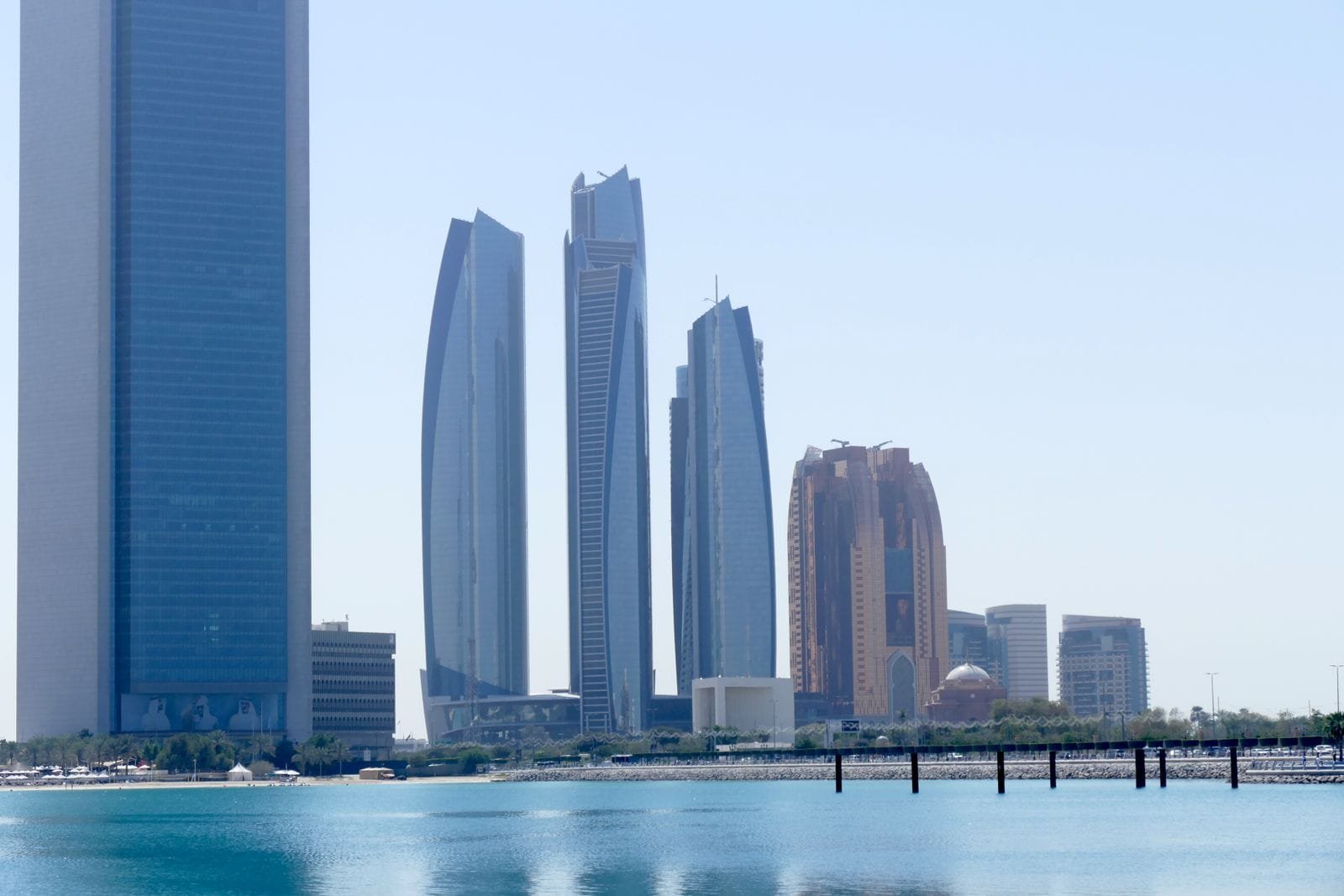
Abu Dhabi Global Market (ADGM) is a federal financial free zone established in 2013 and located on Al Maryah Island in the heart of Abu Dhabi. It is governed by federal decree and operates under its own legal system based on English common law — the same legal framework used in London, Singapore, and Hong Kong.
ADGM has three independent authorities that together run the zone:
- ADGM Registration Authority (RA) — handles company incorporation, licensing for non-financial entities, and ongoing registry functions.
- Financial Services Regulatory Authority (FSRA) — the financial regulator, equivalent to the DFSA in Dubai’s DIFC. Authorises and supervises banks, asset managers, brokers, fintechs, and other regulated firms.
- ADGM Courts — an independent judiciary applying English common law. ADGM also has its own arbitration centre for commercial disputes.
Al Maryah Island is Abu Dhabi’s designated international business district. The physical campus is compact and premium — Grade-A office towers, a Four Seasons hotel, Galleria Mall, and direct connectivity to the Abu Dhabi CBD. It is a 25-minute drive from Abu Dhabi International Airport.
2. Who ADGM Is Really For
Here is what I observe after tracking ADGM regulatory filings and announcements: the zone has a clear identity, and it serves a specific type of business exceptionally well. Founders who match this profile find enormous value. Those who do not end up paying for a prestige address they do not need.
ADGM is a strong fit for:
- Financial services firms seeking international credibility — asset managers, private banks, family offices, hedge funds, brokerage houses, and payment services companies that need FSRA authorisation to service global clients.
- Fintech companies targeting institutional or regulated markets, where the FSRA’s regulatory sandbox and progressive fintech framework are genuine competitive advantages.
- Holding and investment companies — family offices, private equity structures, and multinational groups that need a clean, internationally recognised holding entity. ADGM’s English common law framework makes enforcement of shareholder agreements straightforward in a way that UAE civil law jurisdiction cannot always replicate.
- Professional services firms (legal, consulting, accounting) that want an Abu Dhabi address and serve clients in the ADGM ecosystem or work with financial institutions.
- Tech startups with institutional funding — the Tech Startup Licence is affordable, and being in ADGM signals regulatory maturity to institutional investors.
ADGM is purpose-built for financial services, regulated fintech, holding structures, and professional services firms that need an internationally recognised common law jurisdiction. The mandatory physical office and higher cost base make it unsuitable for freelancers, sole traders, and micro-businesses. Budget at least AED 100,000 for your first year as a non-financial entity — more if you are regulated by the FSRA.
3. Entity Types Available in ADGM
ADGM offers four main entity structures:
Private Company Limited by Shares (Ltd)
The most common structure. Equivalent to a UAE LLC but operating under English common law. Suitable for commercial companies, subsidiaries, and holding structures. Minimum one shareholder and one director (same person can fill both roles). No minimum share capital for non-financial entities.
Holding Company
A dedicated structure for entities that hold shares, assets, or investments without conducting active trade. Popular for family offices, group structures, and private equity vehicles. Simpler compliance requirements than operating companies.
Branch of a Foreign Company
Allows an overseas parent company to establish an ADGM presence without creating a separate legal entity. The parent company remains liable. Useful for global financial institutions looking to serve ADGM-based clients.
Limited Liability Partnership (LLP)
Available for professional services firms — law firms, accounting practices, consultancies. Offers partnership flexibility with limited liability protection for partners.
4. Licence Categories: Financial and Non-Financial
This is the most important section for cost planning. Your licence category determines your regulatory pathway, timeline, and total cost.
Non-Financial Commercial Licences (RA-issued)
If your business does not conduct regulated financial activities, you deal exclusively with the Registration Authority. Activities covered include:
- Trading companies
- Technology and software development
- Management consulting and professional services
- Marketing and media
- Holding and investment vehicles (passive)
- Education and research
The Tech Startup Licence is a specific commercial licence designed for early-stage technology companies. It is the most affordable entry point: USD 1,500 for a three-year licence term. This works out to roughly AED 1,832 per year in licence fees — though the mandatory office still applies.
Financial Services Licences (FSRA-regulated)
If your business touches regulated financial activities, you require FSRA authorisation in addition to RA registration. The FSRA uses a five-category framework based on risk and activity scope:
| FSRA Category | Typical Activities | Min Capital Required |
|---|---|---|
| Category 1 | Banks, deposit-taking institutions, major investment firms | USD 10,000,000 |
| Category 2 | Market makers, credit providers, principal dealers | USD 2,000,000 |
| Category 3A | Brokerage, matched principal dealing, agency services | USD 500,000 |
| Category 3C | Asset management, fund management, custody, trust services | USD 250,000 |
| Category 4 | Advisory, arranging, introducing (lower risk activities) | USD 10,000 |
The Category 4 licence is the most accessible entry point for financial services — at USD 10,000 in minimum capital, it is within reach of boutique advisory firms and corporate finance boutiques. Note that capital requirements are regulatory minimums; actual working capital needed to operate is higher.
5. The Full Cost Breakdown for 2026
ADGM publishes its fees in US Dollars, not AED. I have converted at the current rate of approximately AED 3.67/USD throughout this section. Your actual bill will vary slightly with exchange fluctuations.
Non-Financial Commercial Company — Year One Costs
| Cost Item | USD | AED (approx.) |
|---|---|---|
| Annual registration / commercial licence fee | ~10,300 | ~37,800 |
| Physical office lease (minimum, co-working/business centre) | ~13,600 | ~50,000 |
| Setup / incorporation services (professional fees) | ~4,000–6,000 | ~14,700–22,000 |
| Estimated Year 1 Total | ~28,000–30,000 | ~102,700–110,000 |
Year 2 and beyond: costs reduce once the setup/professional fee is removed. You are looking at roughly AED 88,000–95,000 per year for registration plus the office lease, assuming similar space.
Financial Services Company (FSRA-regulated) — Year One
First-year costs for a regulated entity start from approximately USD 40,000 (AED 147,000), and rise significantly based on category and complexity:
- Cat 4 (advisory): approximately AED 100,000–150,000 yr1 including FSRA application fee, RA registration, office, and professional services.
- Cat 3C (asset management): AED 200,000–300,000+ yr1 once FSRA application fees, legal structuring, and minimum capital are factored in.
- Cat 1 (banking): budgets of AED 500,000+ for year one are realistic, excluding minimum capital of AED 37 million.
Tech Startup Licence — Year One
Licence fee: USD 1,500 for 3 years (AED ~5,500 total, or ~AED 1,830/yr). Still requires physical office, so your total year-one cost is driven by office costs — minimum ~AED 52,000 in year one if you find the most affordable co-working arrangement on Al Maryah Island.
The AED 38,000 licence fee is real, but it is only part of the picture. The mandatory physical office adds at minimum AED 50,000 per year — often more depending on your space requirements. Budget AED 100,000–130,000 for a commercial entity in year one, and do not expect to get away with less unless you are on the Tech Startup Licence with a desk in a shared space.
6. Registration Process and Timeline
ADGM registration is handled primarily through the ACCESSADGM online portal. The process for a non-financial entity follows a clear sequence:
Step 1: Name Reservation
Submit your preferred company name via ACCESSADGM. ADGM checks availability and compliance with naming guidelines. Typically confirmed within 1–2 business days.
Step 2: Application Submission
Complete the online application with:
- Proposed business activities (must match licensed categories)
- Share structure and shareholder details
- Director details and declarations
- Proof of office address (lease registration is required as part of the application — secure your office before or simultaneously with registration)
- KYC documents: passport copies, proof of address within 3 months, and source-of-wealth statements where required
All documents must be in English. Notarisation is not required unless specifically requested by the Registrar.
Step 3: Review and Incorporation
The Registration Authority reviews the application. For non-financial companies with complete documentation: 5–10 business days to receive the Certificate of Incorporation and Commercial Licence.
For FSRA-Regulated Entities
The process adds a regulatory review layer. After RA registration, or in parallel, the FSRA reviews your business plan, financial projections, compliance frameworks, key individual assessments (fitness and propriety), and risk management systems. Expect 2–4 months for a Category 4 licence; longer for higher categories. Engage a UAE regulatory lawyer from the outset — the FSRA’s expectations are rigorous.
7. Office Space Options in ADGM
There is no virtual office option in ADGM — full stop. Every licensed entity must hold a physical, registered office address within the jurisdiction. This is a deliberate policy to ensure genuine economic substance.
Business Centres and Co-Working
The most affordable physical option. Several business centres and co-working operators are licensed to operate in ADGM, offering hot desks, dedicated desks, and private office suites. A dedicated desk arrangement at a business centre typically starts from AED 45,000–55,000 per year, including the lease registration ADGM requires.
Fitted Serviced Offices
Suitable for firms that need a permanent client-facing address and small team space. Fitted offices in ADGM typically range from AED 70,000–120,000 per year for a 3–5 person setup, depending on the provider and specific tower.
Direct Leases (Grade-A Space)
For larger firms or those who want dedicated corporate headquarters, direct Grade-A office space on Al Maryah Island is available from established landlords including Abu Dhabi National Hotels, ICD Brookfield, and Four Seasons. Rates typically start from AED 1,800–2,500 per sqm per year, making it one of the premium office markets in Abu Dhabi.
8. Banking: Which Banks Operate in ADGM
Banking is well-served in ADGM. Because the zone is home to major financial institutions — including some of the largest banks in the UAE — corporate account opening for ADGM-licensed entities is handled with familiarity rather than the friction that sometimes arises in smaller free zones.
Banks with ADGM Presence
- First Abu Dhabi Bank (FAB) — the largest bank in the UAE and Abu Dhabi, with a significant presence at ADGM. Strong for USD, multi-currency accounts, and institutional clients.
- Abu Dhabi Commercial Bank (ADCB) — solid for commercial entities and holding companies.
- HSBC — global connectivity, strong for international wire transfers and FX, favoured by companies with multi-jurisdictional operations.
- Standard Chartered — strong for trade finance and Asian corridor transactions.
- Barclays — serves primarily institutional and investment banking clients in ADGM.
- Mashreq — offers commercial banking services with reasonable onboarding for ADGM-licensed businesses.
- Dhabi Bank — a newer digital-first bank that launched at ADGM, designed specifically for ADGM-based entities. Worth exploring for leaner commercial structures.
Account Opening Timelines
Corporate bank account opening for ADGM entities typically takes 4–8 weeks after licence issuance, depending on the bank, the complexity of your corporate structure, and the completeness of your KYC submission. All banks require standard UAE corporate KYC: licence certificate, certificate of incorporation, memorandum & articles of association, shareholder/director passports, proof of address, business plan, and source-of-funds documentation.
9. Visas and Residency
ADGM-licensed entities can sponsor UAE residence visas for shareholders, directors, and employees through the ACCESSADGM portal. This integrates with Abu Dhabi’s visa processing system.
Investor / Partner Visas
Shareholders and directors of ADGM-licensed companies can apply for UAE residence visas. Standard investor visas are typically issued for 2–3 year terms, renewable upon licence renewal. The process is managed end-to-end via ACCESSADGM without needing to visit separate government offices.
Employment Visas
ADGM-licensed companies can sponsor employee visas. There is no rigid visa quota system as seen in some free zones; however, your visa allocation is assessed in the context of your office capacity and business activity. A business centre desk arrangement may allow 1–2 visas; a larger office allows more.
Abu Dhabi Golden Visa
ADGM has a formal agreement with the Abu Dhabi Residents Office and can nominate qualifying investors and entrepreneurs for the UAE Golden Visa (10-year renewable residence). For financial services professionals and high-net-worth individuals, this is a meaningful benefit — ADGM’s profile with Abu Dhabi government entities gives these nominations genuine weight.
10. Ongoing Compliance Obligations
ADGM has robust compliance expectations. These are not burdensome compared to international standards, but they are firm — and firms that approach ADGM compliance casually will face regulatory action.
Annual Licence Renewal
All ADGM entities must renew their commercial licence annually through the RA, paying renewal fees equivalent to the original annual licence fee. Renewal is processed via ACCESSADGM and is typically straightforward with current documentation.
Beneficial Ownership Register
ADGM requires all entities to maintain an accurate and updated Beneficial Ownership Register, aligned with FATF standards and ADGM’s Companies Regulations 2020. This must be filed with the RA and updated within 14 days of any change.
Audited Financial Statements
Most ADGM entities — including commercial companies and holding entities above certain thresholds — must prepare and file annual audited financial statements with an ADGM-approved auditor. Budget AED 10,000–30,000 per year for audit fees depending on entity complexity.
Economic Substance Regulations (ESR)
ADGM entities in relevant sectors (holding companies, IP holding, finance and leasing, banking, fund management, shipping, headquartering, distribution and service centres) must demonstrate genuine economic substance in the UAE. This means demonstrating actual employees, management, and operations — not just a registered address. ESR notifications are due annually within 6 months of the financial year-end.
UAE Corporate Tax
While ADGM offers 0% corporate tax on income within the zone for qualifying entities, all ADGM companies must register with the UAE Federal Tax Authority (FTA) and file annual corporate tax returns under the UAE Corporate Tax Law (effective since June 2023). Qualifying income from licensed activities continues to be eligible for 0% tax, but registration and filing obligations are mandatory. Engage a UAE tax adviser for specifics to your entity type.
FSRA Compliance (Regulated Entities)
FSRA-regulated firms face additional ongoing obligations: annual FSRA regulatory fees, risk-based supervisory reporting, audit reports to the FSRA, and ongoing fitness-and-propriety assessments for approved persons. The FSRA is an active regulator — it issues public guidance, conducts thematic reviews, and does not treat non-compliance lightly.
Frequently Asked Questions
How much does it cost to set up a company in ADGM in 2026?
A non-financial commercial company in ADGM costs approximately AED 38,000 (USD 10,300) per year in registration fees, plus a mandatory physical office lease of at least AED 50,000 per year. Total year-one costs including setup services typically reach AED 100,000–130,000 for a commercial entity. Financial services companies regulated by FSRA start from AED 150,000+ for year one.
Can I get a virtual office in ADGM?
No. ADGM requires all licensed entities to hold a physical, registered office address within the jurisdiction. Virtual offices are not accepted. This is a firm requirement from the Registration Authority, in line with ADGM’s commitment to genuine substance.
What types of business licences does ADGM offer?
ADGM offers two broad categories: non-financial commercial licences (trading, consulting, technology, professional services, holding companies) and financial services licences regulated by the FSRA (banking, brokerage, asset management, advisory). A Tech Startup Licence is also available from USD 1,500 for a 3-year term.
Which banks operate in ADGM?
Major banks with a presence in ADGM include First Abu Dhabi Bank (FAB), Abu Dhabi Commercial Bank (ADCB), HSBC, Standard Chartered, Barclays, Mashreq, and the newer Dhabi digital bank. Corporate account opening typically takes 4–8 weeks after licence issuance.
How long does ADGM company registration take?
Non-financial commercial entities: 5–10 business days with complete documentation. FSRA-regulated financial services entities: 2–4 months, depending on licence category and regulatory complexity.
Is ADGM good for a tech startup?
ADGM has a dedicated Tech Startup Licence starting at USD 1,500 for a 3-year term. However, the mandatory physical office means you still need to budget for Abu Dhabi office space. The English common law environment and 0% tax are genuine advantages for funded tech companies and scale-ups targeting institutional clients or seeking international credibility with investors.
ADGM is one of the most credible international financial centre jurisdictions in the Middle East. The English common law system, the FSRA’s rigorous but fair regulatory framework, and the physical presence on Al Maryah Island give it a standing that matters when you are dealing with institutional counterparties, international investors, or regulated financial markets. The cost base is higher than most UAE free zones — this is not an accident. ADGM has chosen quality over volume. If you are the right kind of business, the premium is worth it. If you are not, look at zones better suited to your scale and budget. FreezonEra has detailed guides on a range of UAE free zones to help you find the right fit for your business.
Get in touch with a UAE business setup consultant who specialises in ADGM registration and FSRA licensing. Contact FreezonEra for a quote, or use our WhatsApp for a quick chat about your specific structure.
Related: DIFC Free Zone – The Honest 2026 Guide: Costs, Company Types and Banking | ADAFZ (Abu Dhabi Airport Free Zone) – The Honest 2026 Guide.