
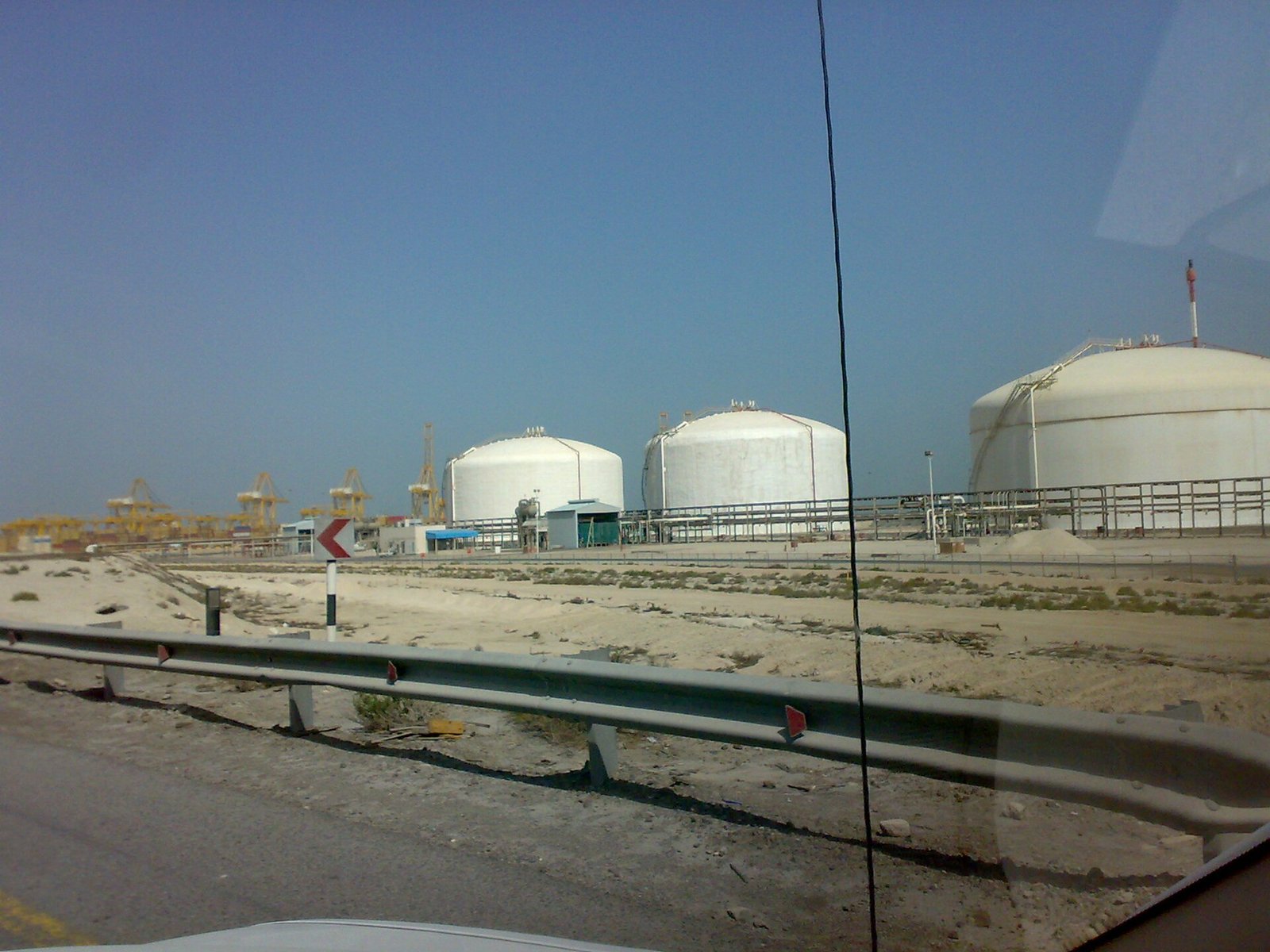

Photo: Bjoertvedt, Jebel Ali Free Zone, CC BY-SA 3.0 via Wikimedia Commons.
If your UAE free zone company earns gross revenue under AED 3,000,000, claiming free zone small business relief sounds like the simplest route to a zero corporate tax bill. It usually is not. Under Federal Decree-Law No. 47 of 2022, a Qualifying Free Zone Person (QFZP) is expressly barred from electing this relief, so a free zone owner is really choosing between two different roads to the same zero — and picking the wrong one can cost you years of tax losses.
Small Business Relief treats eligible UAE entities as having zero taxable income.
Small Business Relief (SBR) sits in Ministerial Decision No. 73 of 2023, issued under Federal Decree-Law No. 47 of 2022 on the Taxation of Corporations and Businesses (the Corporate Tax Law). Its mechanism is widely misunderstood. Electing SBR does not lift your business out of the corporate tax regime; it is an elective relief inside it. When an eligible entity validly elects, it is treated as having no taxable income for that tax period.
The gate is a revenue threshold, and a strict one. Gross revenue must be AED 3,000,000 or less for the relevant tax period and for every previous tax period starting on or after 1 June 2023. This is a revenue test, not a profit test — a company turning over AED 3,200,000 on a net profit of AED 50,000 fails, while one turning over AED 2,900,000 on a net profit of AED 2,000,000 passes comfortably.
Nor is the relief an administrative default. It must be actively elected in the annual corporate tax return filed through the Federal Tax Authority (FTA) EmaraTax portal. Omit the election and the entity is taxed under standard rules, where taxable income above AED 375,000 meets the headline 9% rate.
Ministerial Decision 131 of 2026 extended Small Business Relief through 2029.
On 8 August 2026 the UAE Ministry of Finance issued Ministerial Decision No. 131 of 2026, extending the window for Small Business Relief. Under the original rules SBR applied only to tax periods ending on or before 31 December 2026. It now runs to tax periods ending on or before 31 December 2029, with the AED 3,000,000 threshold unchanged.
The Ministry said the extension “reaffirms the UAE’s commitment to developing a competitive tax system that supports sustainable economic development, promotes compliance and remains aligned with international best practices.”
This matters when you are reading advice. Any guidance, advisory note or blog post published before August 2026 that tells you the relief expires at the end of 2026 is now out of date, and there is a great deal of it still circulating. Eligible resident entities have three more years than the old timetable suggested — which changes whether a short-term election is worth the trade-offs set out below.
Qualifying Free Zone Persons are explicitly excluded from claiming Small Business Relief.
Here is where free zone companies part company with the rest of the UAE market. To elect SBR you must be a resident taxable person, but the Corporate Tax Law bars two categories of resident entity outright:
- Qualifying Free Zone Persons. Any free zone company that meets the statutory criteria to be treated as a QFZP is prohibited from electing Small Business Relief.
- Large multinational group members. Constituent entities of Multinational Enterprise Groups with consolidated group revenue above AED 3.15 billion are also excluded.
SMEs are more than 94% of UAE businesses and over 60% of non-oil GDP, and many sit inside free zones assuming the two incentives stack. They do not. You cannot hold QFZP status to pay 0% on Qualifying Income while leaning on SBR to erase tax on the non-qualifying remainder. It is one road or the other.
For how free zone status interacts with corporate tax in detail, see our guide to QFZP rules for free zone corporate tax.
Free zone companies face a direct choice between the QFZP regime and Small Business Relief.
A free zone company under AED 3,000,000 in revenue therefore has to work out which road costs less — in tax and in compliance. Being in a free zone does not make you a QFZP automatically: you must meet substance rules, derive qualifying income, stay inside the de minimis limit on non-qualifying revenue, prepare audited financial statements and keep transfer pricing documentation.
If the company fails those tests, or deliberately elects out of QFZP status under Article 19 of the Corporate Tax Law, it drops into the standard regime as an ordinary resident taxable person. At that point, if revenue is AED 3,000,000 or less, it can elect free zone small business relief and reach a zero liability without carrying QFZP-level compliance.
| Comparison Parameter | Small Business Relief (SBR Route) | Qualifying Free Zone Person (QFZP Route) |
|---|---|---|
| Tax rate on eligible income | 0% — treated as having no taxable income | 0% on Qualifying Income; 9% on non-qualifying income |
| Revenue ceiling | AED 3,000,000 or less, this period and all previous | No maximum revenue cap |
| Who is shut out | QFZPs and large MNE group members | Anyone failing substance, qualifying activity or de minimis tests |
| Audited financial statements | Not required at this revenue level | Mandatory to preserve QFZP status |
| Tax losses | Losses arising in an SBR period are permanently forfeited | Carried forward under standard rules |
| Transfer pricing documentation | Master and local files waived; arm’s length still applies | Full documentation required |
| Availability window | Tax periods ending on or before 31 December 2029 | Ongoing, no sunset date |
Electing Small Business Relief comes with permanent trade-offs on tax losses and interest.
The relief is not free. Any tax loss generated in a period where SBR is elected cannot be carried forward and cannot be transferred to another taxable person — it is gone for good. For an early-stage free zone company burning cash while revenue stays under AED 3,000,000, electing SBR destroys exactly the losses that would have sheltered profits later, once the business scales past the threshold. The relief saves nothing in a loss-making year, because there was no tax to pay, and costs you the loss.
Losses from earlier periods, before any SBR election, are preserved. They stay on record and can be carried forward once you exit the SBR regime. The same forfeiture rule applies to net interest expenditure disallowed under the general interest limitation rules during an SBR period: it does not carry forward either. And while SBR waives the obligation to maintain transfer pricing master and local files, every transaction with a related party or connected person must still meet the arm’s length principle set out in the UAE free zone transfer pricing rules.
Tax registration and annual filing obligations remain mandatory under Small Business Relief.
A common and expensive assumption is that electing SBR takes the company out of the tax system. It does not. SBR is an administrative relief, not an exemption from compliance, and the obligations below survive it in full.
- Registration. Register through EmaraTax and obtain a Tax Registration Number (TRN).
- Annual returns. File a simplified corporate tax return within 9 months of the end of your financial year.
- The election itself. Claim Small Business Relief inside that submitted return, every period you want it.
- Records. Keep ledgers, invoices and financial records for seven years to evidence your revenue figure in an FTA review.
Missing the registration deadline carries an administrative penalty of AED 10,000, and it applies whether the entity earned nothing, lost money, or qualifies for free zone small business relief. Corporate tax also sits alongside indirect tax duties — our guide to free zone VAT and designated zones covers how those interact.
Specific business models dictate whether Small Business Relief or QFZP status yields lower tax costs.
Because the two routes are mutually exclusive, the right answer turns on where your customers are, how profitable you are, and whether you expect losses. Four worked cases:
| Business profile | Best route | Tax payable | Why |
|---|---|---|---|
| Free zone consultant billing UAE mainland clients. Revenue AED 1.8m, profit AED 700k. | Opt out of QFZP, elect SBR | AED 0 | Mainland service income is non-qualifying and would be taxed at 9% under QFZP. SBR clears it, without audit costs. |
| Free zone software firm exporting to overseas clients. Revenue AED 2.8m, profit AED 1.4m. | Keep QFZP status | AED 0 | Foreign revenue is already qualifying income at 0%, and QFZP preserves loss carry-forward as the firm grows past AED 3m. |
| Early-stage tech startup with heavy capex. Revenue AED 800k, loss AED 600k. | Standard tax, do not elect SBR | AED 0 | There is no tax to relieve. Skipping the election protects the AED 600k loss for future profitable years. |
| Free zone trading company. Revenue AED 4.2m, profit AED 300k. | Standard corporate tax | AED 0 | Revenue exceeds AED 3m so SBR is unavailable, but profit sits under the AED 375,000 nil-rate band. |
The pattern is clear: SBR is strongest for small free zone service providers selling to the mainland, whose income is non-qualifying anyway. It is weakest for loss-making startups and for exporters already at 0% as a QFZP.
Four avoidable mistakes account for most Small Business Relief problems.
The FTA publishes a Small Business Relief Guide, first issued on 29 August 2023, and it actively reviews claims. These are the errors that turn into back-taxes.
Splitting one business across licences is an abuse, not a strategy.
Dividing a single enterprise into two free zone licences earning AED 2,000,000 each, to keep both under the threshold, is caught by the General Anti-Abuse Rule in Article 50 of the Corporate Tax Law. If the FTA concludes the split existed to obtain the relief, it will disregard the structure, aggregate the revenue, deny SBR and assess 9% tax plus penalties.
The threshold measures gross revenue, never net profit.
The AED 3,000,000 figure is turnover under accepted accounting standards — all sales and income before any deduction for costs, cost of goods sold or overheads. A business with AED 3,100,000 of turnover cannot claim SBR even if it made a loss.
The relief only exists if you claim it in the return.
There is no automatic application. Fail to make the election in EmaraTax for a given tax period and the FTA computes your liability under standard rules, taxing profit above AED 375,000 at 9%.
Filing as a QFZP while claiming the relief is non-compliant.
The two cannot coexist. Presenting a return as a Qualifying Free Zone Person while also claiming free zone small business relief on non-qualifying income will be adjusted on audit, with penalties.
Frequently Asked Questions
Can a free zone company claim Small Business Relief while keeping QFZP status?
No. Qualifying Free Zone Persons are expressly excluded from electing Small Business Relief, so the two cannot be combined. To claim the relief, a free zone entity must either fail the QFZP conditions or formally elect out of the QFZP regime under Article 19 of the Corporate Tax Law and be taxed as an ordinary resident taxable person.
What happens if revenue exceeds AED 3,000,000 in a tax period?
Small Business Relief becomes unavailable for that period and for later periods, because the threshold must be satisfied in the current tax period and all previous ones. The business then follows standard corporate tax rules: 0% on taxable income up to AED 375,000 and 9% above it, unless it instead qualifies as a Qualifying Free Zone Person.
Does electing Small Business Relief remove the need to keep accounts?
No. The election waives formal transfer pricing master and local files, and at this revenue level audited financial statements are not required for tax purposes, but full financial records must still be kept for seven years. The FTA needs those records to confirm that gross revenue genuinely stayed at or below AED 3,000,000.
How does Ministerial Decision 131 of 2026 change the deadline?
Issued on 8 August 2026, it extends Small Business Relief to tax periods ending on or before 31 December 2029, three years beyond the original 31 December 2026 cut-off. The AED 3,000,000 threshold is unchanged. Any guidance published before August 2026 saying the relief expires in 2026 is now out of date.
Are tax losses preserved if a company elects the relief?
Losses arising in a tax period where Small Business Relief is elected are permanently forfeited — they cannot be carried forward or transferred. Losses from earlier periods, before any election, survive and remain available to offset taxable income once the business stops claiming the relief. This is the main reason loss-making companies should not elect.
Do related-party transactions still need to be at arm’s length?
Yes. Electing Small Business Relief removes the obligation to prepare transfer pricing master and local files, but it does not switch off the arm’s length principle. All dealings with related parties and connected persons must still be priced on arm’s length terms, and the Federal Tax Authority retains full power to inspect and adjust them.
The choice comes down to your revenue trajectory, where your customers sit, and whether you expect losses. QFZP suits exporters and companies with room to grow; the relief suits small mainland-facing free zone firms wanting a zero bill without audit-grade compliance — now with a runway through 2029.
Explore UAE Freezone options today →