
By the FreezonEra Editorial Team | Updated July 2026
Most founders researching UAE free zones stumble on Dubai CommerCity when they type “e-commerce free zone UAE” into Google. Then they hit three different price pages with three wildly different numbers and give up. So let’s fix that.
Dubai CommerCity (DCC) is the UAE’s only free zone built exclusively for digital commerce and logistics. It sits next to Dubai International Airport (DXB), is managed by the Dubai Integrated Economic Zones Authority (DIEZ), and launched in 2020 as a joint initiative of the Government of Dubai and Dubai Airports. If your business sells products or services online and ships to regional or global markets, this is the free zone purpose-built for your model.
This guide gives you the real numbers — licence costs, visa fees, workspace options, what’s included, what’s not, and who DCC actually makes sense for in 2026.
What Is Dubai CommerCity (DCC)?
Dubai CommerCity is a dedicated e-commerce free zone launched in 2020 under the Dubai Integrated Economic Zones Authority (DIEZ) — the same authority that oversees DAFZA. Located adjacent to Dubai International Airport in the Umm Ramool district of Dubai, DCC was designed with one purpose: to make the UAE the e-commerce hub of the MENASA (Middle East, North Africa, and South Asia) region.
The zone is structured around three core areas: a Business Cluster (offices and licensing), a Social Cluster (coworking and retail), and a Logistics Cluster (warehousing and fulfilment). That last cluster is unusual — most free zones offer a box on a floor plan and leave logistics to you. DCC has pre-integrated fulfilment infrastructure and existing partnerships with courier and payment gateway providers built into the zone.
DCC operates as a Free Zone with 100% foreign ownership and the standard UAE free-zone benefits: no personal income tax, no corporate tax on qualifying income, full profit repatriation, and no import/export duties within the zone. It currently hosts several hundred companies and continues to grow as UAE e-commerce volumes rise.
Who Is Dubai CommerCity Right For?
DCC is genuinely niche — and that is a feature, not a limitation. The zone’s infrastructure, partner ecosystem, and regulatory setup are built around online commerce. The ideal DCC registrant looks like one of the following:
- Online retailers and D2C brands — whether selling fashion, electronics, beauty, or any consumer product to UAE or GCC customers online
- Dropshippers and cross-border traders — businesses that source globally and sell into MENASA markets without holding large stock
- Digital marketplaces and platforms — e-commerce platform operators, aggregators, or multi-vendor marketplace businesses
- Fulfilment and 3PL operators — logistics companies handling last-mile delivery or warehousing for other e-commerce brands
- E-commerce enablers — payment gateway providers, digital marketing agencies serving the e-commerce sector, or SaaS companies serving online retailers
Licence Types at Dubai CommerCity
DCC offers four main licence categories, and most applicants will fall clearly into one of them:
eCommerce Licence
The flagship licence for online retailers, marketplaces, and digital trading businesses. Enables you to sell goods and services online, manage digital transactions, and handle cross-border trade. This is what the zone is built for — if you sell products through a website or app, this is your licence.
Trading Licence
For import, export, and distribution of physical goods. Works well for businesses that have both online and traditional distribution channels, or that trade in bulk with wholesale customers alongside retail operations.
Logistics Licence
Covers warehousing, fulfilment, courier services, freight forwarding, and supply chain management. Paired with DCC’s on-site warehousing infrastructure, this is a strong choice for 3PL operators and fulfilment businesses.
Service Licence
For e-commerce support businesses: digital marketing, technology development, payment services, analytics, and similar. Not for general professional services — the service activities approved here are skewed toward e-commerce enablement.
One noteworthy feature: a single DCC licence can cover up to 20 activities across four different industry groups. This gives growing businesses room to add services or product lines without taking out multiple licences.
Dubai CommerCity Licence Cost in 2026 — Full Breakdown
Here is where most guides give you a vague range and move on. Let’s be more specific.
Base Licence Fee
Dubai CommerCity trade licences start at AED 9,000/year at the entry level, with most standard single-activity licences priced around AED 11,200/year. Premium licences covering additional activity groups or regulated activities reach AED 20,000–30,000/year.
Workspace Packages (Year 1 All-In Estimates)
Basic Setup — No Physical Workspace
Licence: AED 11,200 | Visa (1 person): AED 2,750 | Medical: AED 330 | Emirates ID: AED 370 | Establishment Card: AED 280
Total Year 1: approximately AED 14,930
Flexi-Desk Package — 2 Visas
Shared desk access, 2 investor/employee visa quotas included
Total Year 1: approximately AED 21,995 (package price inclusive)
Fitted Office — 3 Visas
Dedicated office unit with 3 visa quotas
Total Year 1: approximately AED 61,870
Warehouse/Logistics Space
Priced on unit size; starting rates vary by square footage. Contact DCC directly or via a registered consultant for current warehouse pricing — this changes with demand and contract length.
Additional Visas (Beyond Package)
Each additional visa runs approximately AED 3,000–5,000 depending on visa type, including medical test, Emirates ID, and stamping fees. Mandatory health insurance is additional and typically AED 700–1,500/year per person for basic cover.
Realistic First-Year Budget
A two-person e-commerce startup using a flexi-desk should budget AED 25,000–35,000 for Year 1 covering licence, workspace, visas, insurance, and administrative costs. A larger team or a business that needs a fitted office or warehouse will land in the AED 50,000–70,000 range.
Year 2 Renewal Costs
Annual renewals are where UAE free zone costs often surprise first-time operators. At DCC:
- Licence renewal: approximately AED 10,080/year
- Visa renewal: approximately AED 2,750 per visa (every 2–3 years depending on visa type)
- Workspace renewal: added separately at your contracted rate
A lean one-visa operation renewing just the licence and visa should budget approximately AED 12,830/year from Year 2. Add office or warehouse renewal costs on top of that.
The Dual Licence Option — Mainland Access Without a Mainland Office
This is one of DCC’s most practical features for brands that want both free-zone ownership benefits and access to UAE retail or B2B markets.
Dubai CommerCity offers a Dual Licence arrangement with Dubai’s Department of Economy and Tourism (DET). This allows your free-zone company to simultaneously hold a DET licence, giving you the legal ability to trade directly with UAE mainland customers and companies — without needing a separate mainland entity, a local sponsor, or a physical mainland office.
It is worth noting that the DET dual licence adds cost (DET registration fees apply separately) and is not always necessary. If your business sells exclusively via an online platform to end consumers who pay before delivery, you may not legally require mainland registration at all. This is worth confirming with a licensed business setup consultant before committing to the dual structure.
Banking at Dubai CommerCity
DCC has a partnership with Emirates NBD as its primary banking partner. The benefit of this partnership is that account opening for DCC companies follows a streamlined process compared to many other free zones — Emirates NBD is already familiar with the zone’s licence documentation and structure.
Standard UAE corporate banking considerations still apply: expect to provide 3–6 months of projected financials, a business plan, shareholder passport copies, and source-of-funds documentation. Initial minimum deposit requirements at Emirates NBD for business accounts typically run AED 10,000–50,000 depending on account type, with monthly minimum balance requirements to avoid service fees.
You are not restricted to Emirates NBD — other banks (Mashreq, FAB, HSBC, Wio) will accept DCC companies, though opening timelines outside the partner bank can extend to 4–8 weeks. For e-commerce businesses processing online payments, also plan for a payment gateway account (Stripe, Checkout.com, PayTabs, or Telr — all operating in UAE) alongside your corporate bank account.
Infrastructure and E-Commerce Ecosystem
DCC’s physical infrastructure is its main differentiator from a generic free zone with an “e-commerce activity” on the licence list. The zone includes:
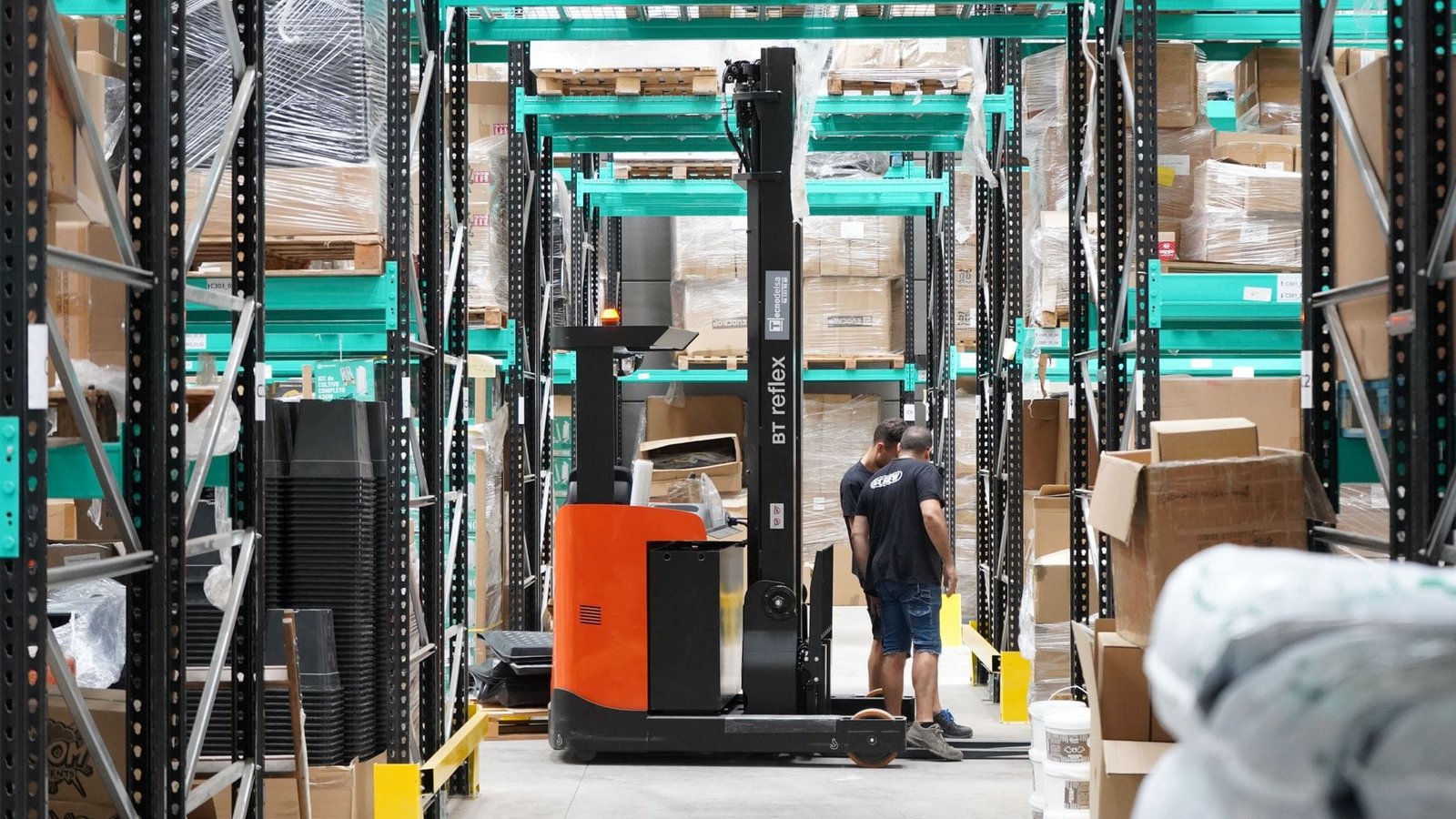
- On-site fulfilment and warehousing — purpose-built units with temperature control and security, manageable directly or through DCC’s logistics partners
- Pre-integrated courier partnerships — relationships with regional last-mile delivery providers, reducing the time to get shipping agreements in place
- Payment gateway integrations — established connections with UAE-licensed payment service providers, useful for businesses that need to set up payment infrastructure quickly
- Tech and IT support infrastructure — high-speed connectivity, co-location space, and IT service providers within or adjacent to the zone
- DXB airport adjacency — air cargo access and proximity to customs clearance points, relevant for businesses that airfreight products in or out of the UAE
For a business importing stock and shipping directly to UAE consumers or GCC markets, having warehousing, customs access, and courier partnerships in one location materially reduces operational friction.
Company Structures Available
Free Zone Establishment (FZE)
A single-shareholder entity. Suitable for solo founders or businesses where one individual or corporate entity holds 100% of shares.
Free Zone Company (FZCO)
A multi-shareholder entity, requiring a minimum of two shareholders. Suitable for partnerships or businesses with investor co-founders.
Both structures benefit from 100% foreign ownership and no minimum share capital requirement beyond nominal registration. Branch structures of existing foreign companies are also possible for businesses looking to establish a UAE presence for an already-operating entity.
How to Set Up a Company in Dubai CommerCity — Step by Step
Step 1 — Choose licence type and business activities
Select your licence category (eCommerce, Trading, Logistics, or Service) and identify the specific activity codes that match your business model. DCC’s approval team will review your activity list for zone eligibility.
Step 2 — Reserve your company name
Submit your preferred company name for approval. DCC follows standard UAE naming conventions: no offensive terms, no direct reference to governments or ruling families, and no activity implied in the name that isn’t covered by the licence.
Step 3 — Prepare and submit documents
For a new FZE: passport copies for all shareholders and directors, passport-size photo, bank reference letter, brief business plan, and application forms. For corporate shareholders, add the parent company’s registration documents and board resolution.
Step 4 — Pay government fees
Settle the licence fee, registration fee, and any workspace or visa fees. Payment is made to the zone authority. Allow 1–2 business days for payment processing.
Step 5 — Receive licence and incorporation documents
DCC issues your trade licence, share certificate, and memorandum of association. The full process takes approximately 5–7 working days with complete documents. Your licence is issued digitally; a physical copy can be attested if needed for banking or visa purposes.
Corporate Tax Position
UAE Corporate Tax (9%) applies to taxable income above AED 375,000 for qualifying businesses from June 2023 onwards. DCC companies may be eligible for Qualifying Free Zone Person (QFZP) status, which provides a 0% rate on Qualifying Income from transactions with other free zone businesses or on income from international trade — and 9% only on income from UAE mainland trade.
If your primary customers are outside the UAE or other free zone businesses (common for e-commerce export businesses), the QFZP designation can be materially beneficial. Confirm eligibility with a registered UAE tax agent, as the rules for QFZP classification have specific substance and income composition requirements that apply zone-by-zone. All free zone companies must also register for UAE corporate tax (registration is free and mandatory regardless of QFZP status).
Hidden Costs Most Guides Skip
- E-channel registration (required for visa processing): approximately AED 2,000 one-time setup
- Health insurance: mandatory for visa holders; basic Dubai health insurance from AED 700–1,500/person/year
- Accounting/audit: UAE corporate tax requires financial records; basic annual bookkeeping from AED 3,000–8,000/year for small companies
- Payment gateway setup: merchant account fees, integration costs, and per-transaction charges (typically 2–3% of transaction value for UAE payment gateways)
- Licence amendments: adding activities or changing trade name costs AED 500–2,000 per amendment
- Bank account minimum balance fees: if monthly balance drops below the bank’s minimum threshold (typically AED 10,000–25,000), monthly fees of AED 200–500 apply
RAKEZ: Worth Comparing for E-Commerce Businesses
If DCC’s cost structure is at the higher end of your budget, RAKEZ (Ras Al Khaimah Economic Zone) is worth a direct comparison. RAKEZ offers e-commerce and trading licences at lower entry price points — flexi-desk packages from as low as AED 11,000–15,000/year — and provides a solid business infrastructure without the DCC-specific e-commerce ecosystem perks. If your business does not need on-site warehousing at DXB, or if you already have your logistics handled, the cost saving at RAKEZ can be substantial. The right choice depends on whether DCC’s airport adjacency and fulfilment infrastructure generate concrete value for your specific business model.
Is Dubai CommerCity Right for Your Business in 2026?
- Online retailers shipping products from the UAE to GCC, MENA, or global markets
- D2C brands that want UAE-based fulfilment close to an international airport
- E-commerce businesses that need both free-zone tax status and a clear path to UAE mainland sales via the Dual Licence
- Logistics and 3PL businesses that want on-zone warehousing without external lease negotiations
- Founders who want a zone purpose-built for e-commerce with existing tech and payment infrastructure
DCC is not the cheapest free zone in the UAE, and it does not try to be. It is purpose-built infrastructure for a specific type of business. If you are an e-commerce operator who will genuinely use the warehousing, logistics partnerships, and airport proximity, the premium over a generic free zone likely pays for itself in reduced logistics friction. If you are setting up a purely digital service business or one with no logistics angle, the cost-to-benefit ratio shifts and a zone like RAKEZ or IFZA may serve you better at lower cost.
Frequently Asked Questions — Dubai CommerCity
What is the licence cost at Dubai CommerCity in 2026?
Dubai CommerCity trade licences start from AED 9,000 per year for basic packages, with a typical base licence around AED 11,200/year. A flexi-desk 2-visa package runs approximately AED 21,995 all-in for Year 1.
Who is Dubai CommerCity best suited for?
Dubai CommerCity is built specifically for e-commerce businesses, online retailers, digital marketplaces, dropshippers, cross-border traders, and logistics/fulfilment operators. It is the UAE’s only free zone dedicated exclusively to e-commerce and digital commerce.
How long does it take to set up a company in Dubai CommerCity?
With all documents in order, company registration at Dubai CommerCity typically completes in around 5–7 working days. The process can be completed remotely.
Can a Dubai CommerCity company sell to the UAE mainland?
Yes. Dubai CommerCity offers a Dual Licence arrangement with Dubai’s Department of Economy and Tourism (DET), allowing your free zone company to hold a DET licence and access the local UAE market without a separate mainland office.
What are the visa costs at Dubai CommerCity?
Each investor or employee visa at Dubai CommerCity costs approximately AED 2,750–5,000, covering entry permit, medical test (AED 330), Emirates ID (AED 370), and establishment card (AED 280). Health insurance is mandatory and billed separately.
What is the annual renewal cost at Dubai CommerCity?
Annual licence renewal at Dubai CommerCity runs approximately AED 10,080, with each visa renewal adding around AED 2,750. Total year-2 costs typically start at AED 12,830 before any office or warehouse renewals.
Does Dubai CommerCity offer warehousing?
Yes. Dubai CommerCity includes dedicated warehousing and fulfilment infrastructure on-site, integrated with logistics and courier partners. Warehouse units are available in addition to virtual desks and fitted office spaces.